One of the most important — and most misunderstood — concepts in SC-900 (Microsoft Security, Compliance, and Identity Fundamentals) is the difference between authentication and authorization.
Many IT incidents, security misconfigurations, and access issues happen not because tools are missing, but because these two concepts are confused or treated as the same thing.
SC-900 deliberately emphasizes this distinction because every access decision in Microsoft environments depends on it.
This post explains authentication vs authorization clearly, from a real-world Microsoft security perspective, and shows why understanding this difference is essential for both the exam and day-to-day IT operations.
Learning Objectives
After completing this guide, you will be able to:
- Explain the difference between authentication and authorization.
- Describe how Microsoft separates these two concepts in practice.
- Identify why authentication alone is not sufficient for security.
- Understand how authentication and authorization apply within Zero Trust.
Why SC-900 Focuses on Authentication vs Authorization
Modern security no longer relies on network location or perimeter firewalls alone. In cloud-first environments built on Microsoft platforms, access decisions happen every time a user or system interacts with a resource.
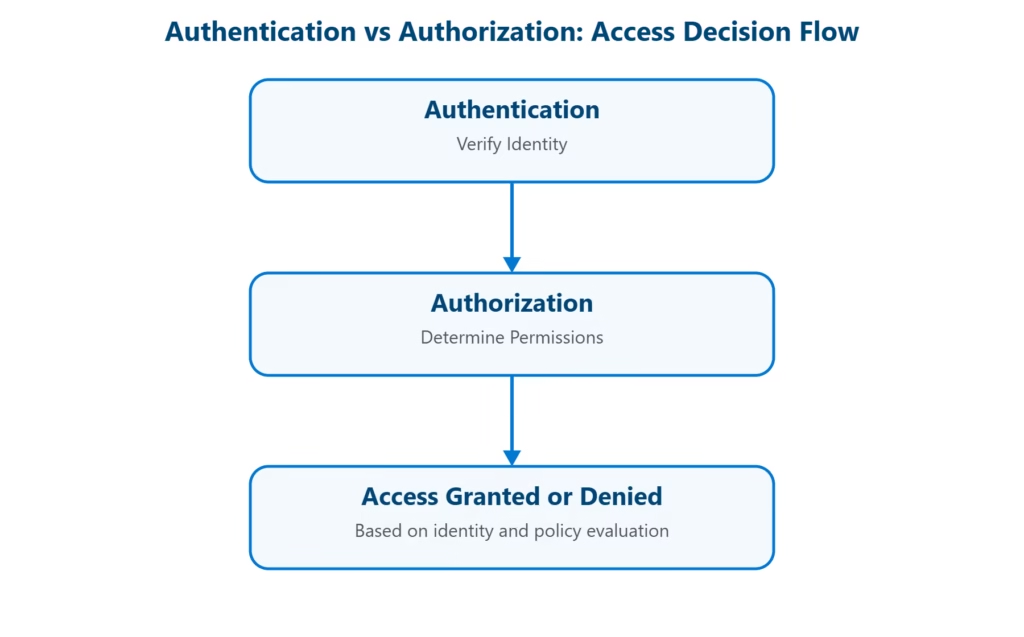
To make the correct decision, Microsoft separates access into two stages:
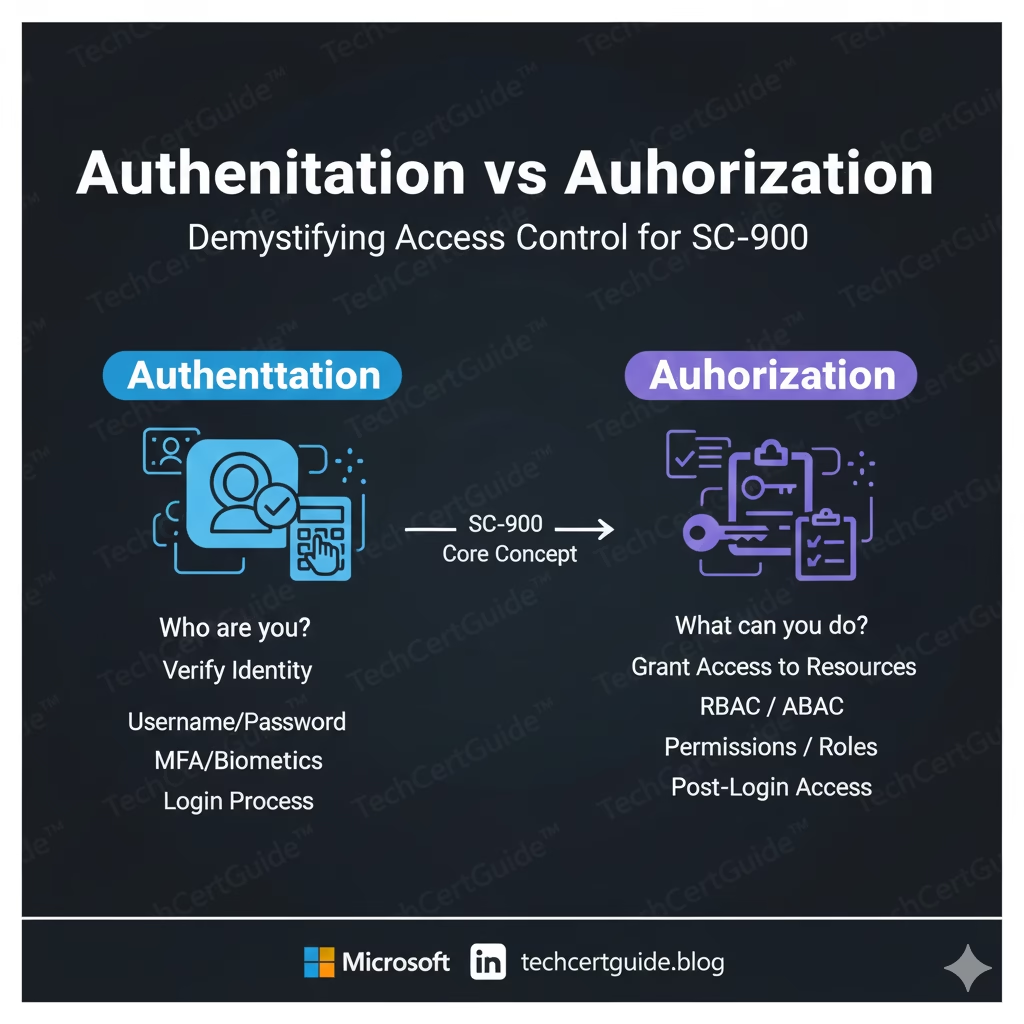
- Authentication – Who are you?
- Authorization – What are you allowed to do?
SC-900 tests whether you understand this flow conceptually, not how to configure it in detail.
What Is Authentication? (SC-900 Perspective)
Authentication is the process of verifying the identity of a user, device, or application.
In simple terms, authentication answers one question:
“Are you really who you claim to be?”
Authentication is handled centrally by Microsoft Entra ID.
Common Authentication Methods in Microsoft Environments
SC-900 expects awareness of authentication methods such as:
- Username and password
- Multi-Factor Authentication (MFA)
- Biometrics
- Certificate-based authentication
At this stage, no access is granted yet. Authentication only establishes identity confidence.
What Is Authorization? (SC-900 Perspective)
Authorization happens after authentication succeeds.
It answers a different question:
“Now that we know who you are, what are you allowed to access?”
Authorization determines:
- Which applications you can open
- Which data you can view or modify
- Which administrative actions you can perform
Authorization decisions are enforced using:
- Roles (Role-Based Access Control, or RBAC)
- Permissions
- Policies
- Conditions
Authentication proves identity.
Authorization defines scope of access.
Authentication vs Authorization: The Core Difference
A simple way to remember this:
- Authentication = Identity verification
- Authorization = Access permission
Think of entering an office building:
- Authentication checks your ID badge
- Authorization determines which floors you can access
Many security failures occur when authentication is strong, but authorization is overly permissive.
How Microsoft Separates These Two in Practice
Microsoft designs identity security so that:
- Authentication confirms identity and risk
- Authorization evaluates policies and permissions
This separation allows Microsoft to:
- Block risky sign-ins even for valid users
- Apply least-privilege access
- Enforce Zero Trust principles
SC-900 reinforces this architecture because it is central to modern cloud security.
Authentication Signals vs Authorization Decisions
SC-900 introduces the idea that authentication and authorization rely on different inputs.
Authentication Signals
- Credentials
- MFA success or failure
- Sign-in risk
- Location and device signals
Authorization Decisions
- User role
- Group membership
- Application permissions
- Policy conditions
Security improves when these layers are evaluated independently but together. Conceptually, Microsoft Entra Identity Protection distinguishes Sign-in Risk (the risk of a specific sign-in attempt) from User Risk (the likelihood that an account itself has been compromised).
Why Authentication Alone Is Not Enough
A common misconception is:
“If MFA is enabled, the environment is secure.”
This is not true.
Authentication can be strong, but:
- Admin roles may be over-assigned
- Applications may have excessive permissions
- Legacy access may bypass controls
SC-900 highlights this because many breaches occur after successful authentication, not before it.
Authorization weaknesses often cause:
- Excessive access
- Privilege misuse
- Data exposure
Authorization Without Proper Authentication Is Also Risky
The opposite mistake also exists.
If authentication is weak:
- Password-only access
- Legacy authentication protocols
- No risk evaluation
Even well-designed authorization policies become ineffective.
SC-900 teaches that both layers must work together to reduce risk.
Authentication and Authorization in Zero Trust
SC-900 strongly connects this topic with Zero Trust.
Zero Trust assumes:
- No implicit trust
- Every access request must be verified
- Identity is evaluated continuously
In this model:
- Authentication verifies identity every time
- Authorization is re-evaluated based on context
This is why Microsoft treats identity as the new security perimeter. In practice, Microsoft Entra applies this model through Conditional Access, which evaluates signals to make automated, context-based access decisions.
Real-World IT Scenarios Where This Matters
Understanding authentication vs authorization helps explain many daily IT situations:
- A user successfully signs in but cannot access an app
- MFA passes, but access is blocked
- An admin account signs in but lacks permissions
- A service account works in one environment but fails in another
These are authorization outcomes, not authentication failures.
SC-900 helps professionals diagnose issues correctly instead of guessing.
Why SC-900 Tests This Concept Explicitly
SC-900 does not expect you to configure policies or roles.
It expects you to understand:
- Where identity verification ends
- Where access decisions begin
- Why separating these improves security
This conceptual clarity prepares learners for:
- Advanced identity certifications
- Security operations roles
- Infrastructure design decisions
Common Mistakes SC-900 Helps You Avoid
SC-900 addresses frequent misunderstandings such as:
- Treating authentication and authorization as the same
- Assuming MFA fixes all security issues
- Over-assigning roles instead of controlling access
- Ignoring authorization when troubleshooting access issues
Correcting these early prevents serious architectural problems later.
Final Thoughts: Why This Concept Matters Beyond the Exam
Authentication vs authorization is not just an exam topic.
It is a security mindset.
Understanding this difference helps you:
- Design safer access models
- Troubleshoot access issues accurately
- Communicate better with security teams
- Apply Zero Trust principles correctly
SC-900 ensures that learners grasp this foundation before moving into deeper security implementations.
Also, view our detailed guide on what is SC-900 to understand Microsoft Security, Compliance, and Identity fundamentals.
For official and up-to-date exam objectives, learning paths, and reference material, refer to Microsoft Learn’s SC-900 documentation.
What’s Next in the SC-900 Series
In the next post, we’ll cover:
Multi-Factor Authentication (MFA) and Identity Protection in SC-900: Why Extra Verification Matters
This will build directly on the authentication concepts explained here.