Cloud App Security & Visibility in SC-900 explains why organisations must see and control how cloud applications are actually used, not just which ones are officially approved.
Modern IT environments extend far beyond the corporate network. Users sign in from anywhere, access dozens of cloud apps, and share data across platforms—often without security teams realising it. SC-900 introduces cloud app security to highlight risk that exists outside traditional perimeters.
This article explains the concept clearly, without configuration or admin steps, exactly as expected for SC-900 (Microsoft Security, Compliance, and Identity Fundamentals).
Why SC-900 Covers Cloud App Security
The traditional perimeter is gone.
Today:
- Users access cloud apps directly
- Data moves between platforms
- IT teams may not know every app in use
This creates visibility gaps.
SC-900 includes cloud app security to help learners understand:
- Why visibility is critical
- How unmanaged apps increase risk
- Why identity-based monitoring matters
What Is Cloud App Security? (SC-900 View)
At SC-900 level, cloud app security is best understood as:
The ability to discover, assess, and control cloud application usage to reduce risk.
It focuses on:
- Visibility
- Risk awareness
- Policy-based control
SC-900 does not expect knowledge of configuration or enforcement actions.
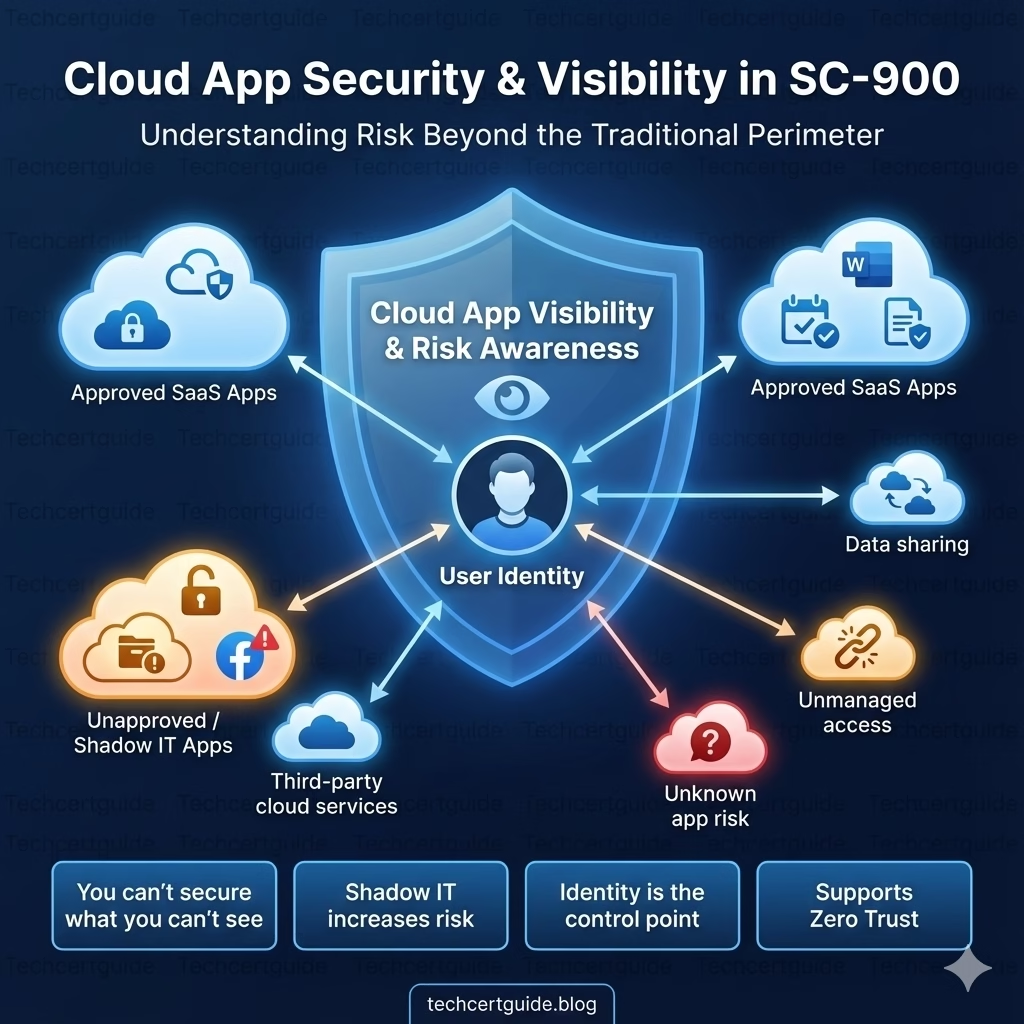
The Problem of Shadow IT
Shadow IT refers to cloud applications used without formal IT approval.
Examples include:
- File-sharing tools
- Online collaboration apps
- Personal cloud storage
- Third-party SaaS platforms
Why this matters:
- Data may be shared outside organisational control
- Security standards may not be met
- Compliance requirements may be violated
SC-900 introduces shadow IT to explain why unknown apps equal unknown risk.
Why Visibility Comes Before Control
You cannot secure what you cannot see.
Cloud app visibility helps organisations:
- Identify which apps are in use
- Understand how data is accessed
- Detect risky behaviour
SC-900 focuses on the principle of visibility, not on technical discovery methods.
Microsoft Defender for Cloud Apps (Conceptual)
SC-900 introduces Microsoft Defender for Cloud Apps at a high level to explain how Microsoft approaches cloud app security.
Conceptually, it helps organisations:
- Gain visibility into cloud app usage
- Assess risk of applications
- Monitor user activity across apps
The exam tests understanding of purpose, not tool operation.
Cloud App Security and Identity
Cloud apps rely heavily on identity.
Once a user is authenticated:
- Access may span multiple applications
- Data can move quickly
- Traditional network controls are bypassed
SC-900 links cloud app security with identity to reinforce:
Identity is the primary control point for cloud access.
Cloud App Security and Zero Trust
Zero Trust assumes:
- Users may access apps from anywhere
- Devices may be unmanaged
- Apps may not be trusted by default
Cloud app security supports Zero Trust by:
- Monitoring usage continuously
- Evaluating risk signals
- Applying policy-based decisions
This conceptual link is exam-relevant.
Visibility vs Blocking (Important SC-900 Distinction)
SC-900 emphasises awareness over enforcement.
At this level, cloud app security is about:
- Knowing what apps are used
- Understanding risk patterns
- Supporting informed decisions
It is not about:
- Blocking every unapproved app
- Technical enforcement steps
Common Misconceptions About Cloud App Security
SC-900 helps correct these myths:
- “If it’s SaaS, it’s secure.”
Security depends on usage and controls. - “Only approved apps matter.”
Unapproved apps often carry higher risk. - “Network security is enough.”
Cloud access bypasses the network perimeter.
SC-900 Exam Tip
For SC-900:
- Understand what cloud app security means
- Know why visibility is critical
- Recognise the risk of shadow IT
- Link cloud app security to identity and Zero Trust
If you can explain why visibility matters more than blocking, you’re exam-ready.
Final Thoughts: You Can’t Protect What You Can’t See
Modern security isn’t just about stopping attacks.
It’s about understanding behaviour, usage, and risk.
By improving cloud app visibility, organisations:
- Reduce unknown risks
- Protect data more effectively
- Support Zero Trust strategies
SC-900 introduces cloud app security to ensure learners understand how security extends beyond the traditional perimeter.
Also, view our detailed guide on what is SC-900 to understand Microsoft Security, Compliance, and Identity fundamentals.
For official and up-to-date exam objectives, learning paths, and reference material, refer to Microsoft Learn’s SC-900 documentation.
What’s Next in the SC-900 Series
Next, we’ll cover:
Microsoft Defender XDR Explained in SC-900: Why Integrated Security Matters