GRC Fundamentals in SC-900
Security is not only about blocking attacks.
It is also about making the right decisions, managing risk, and meeting regulatory obligations.
This is where GRC Governance, Risk, and Compliance becomes essential.
In SC-900 (Microsoft Security, Compliance, and Identity Fundamentals), GRC is introduced to help learners understand how organisations control security responsibly, not just technically.
This article explains GRC fundamentals in SC-900, why they matter, and how Microsoft approaches governance and compliance in modern cloud environments.
Why SC-900 Includes GRC Fundamentals
Many security failures happen not because tools were missing, but because:
- Policies were unclear
- Risks were not understood
- Compliance requirements were ignored
SC-900 introduces GRC to ensure learners understand that security is both technical and organisational.
GRC helps organisations:
- Define security rules
- Understand and manage risk
- Demonstrate compliance with laws and standards
What Is GRC? (SC-900 Definition)
GRC stands for:
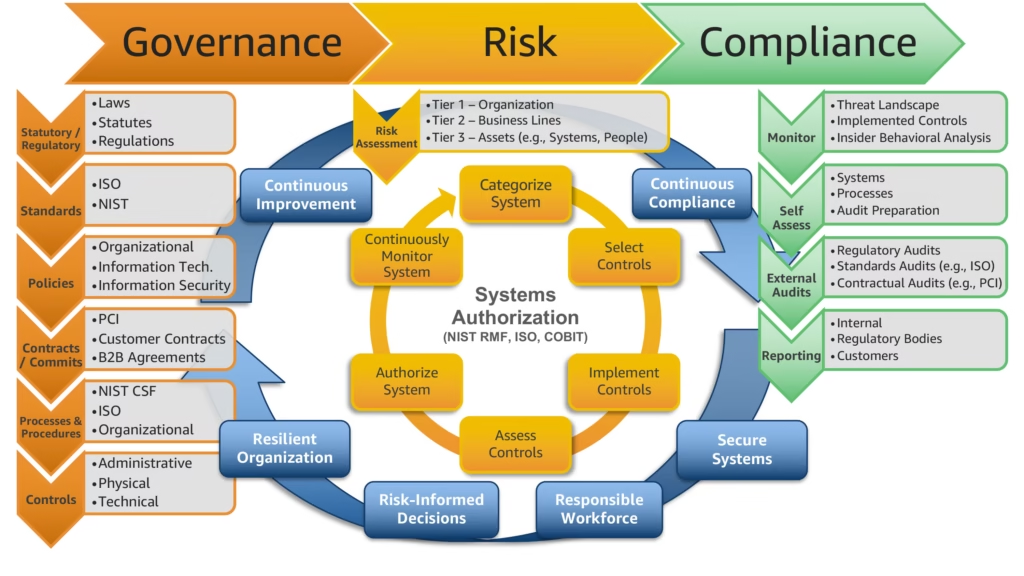
- Governance – How security rules and policies are defined and enforced
- Risk – How threats and vulnerabilities are identified and prioritised
- Compliance – How organisations meet legal, regulatory, and internal requirements
Together, GRC ensures that security efforts are structured, measurable, and auditable.
SC-900 focuses on understanding these concepts, not implementing governance frameworks.
Governance: Setting the Rules
Governance defines how security decisions are made.
It includes:
- Security policies
- Access rules
- Data handling guidelines
- Accountability and oversight
In simple terms:
Governance decides what is allowed and what is not.
Without governance:
- Security controls become inconsistent
- Responsibilities are unclear
- Audits become difficult
SC-900 highlights governance to show that strong security starts with clear direction.
Risk: Understanding What Matters Most
Risk management is about identifying and prioritising threats.
Risk is typically evaluated based on:
- Likelihood of an event
- Impact if it occurs
Not all risks can be eliminated.
GRC helps organisations decide:
- Which risks to accept
- Which risks to reduce
- Which risks to mitigate with controls
In SC-900, risk is introduced to explain why security decisions are based on probability and impact, not fear.
Compliance: Meeting Requirements
Compliance ensures that organisations follow:
- Laws and regulations
- Industry standards
- Internal security policies
Examples include:
- Data protection regulations
- Audit requirements
- Retention rules
In simple terms:
Compliance proves that security controls are working and enforced.
SC-900 focuses on understanding why compliance exists and how it supports trust and accountability.
How Governance, Risk, and Compliance Work Together
GRC is not three separate activities.
They work together as a cycle:
- Governance defines policies
- Risk management identifies threats to those policies
- Compliance verifies adherence
If one area is weak, the entire security program suffers.
SC-900 introduces this relationship to help learners understand how security is managed at an organisational level.
GRC in Microsoft Environments (High-Level View)
Microsoft integrates GRC concepts into its platforms by:
- Providing visibility into security posture
- Helping organisations assess risk
- Supporting compliance reporting
SC-900 does not require tool-level knowledge.
It focuses on understanding that modern platforms support continuous governance and compliance, not manual checks.
GRC vs Security Operations (Important Distinction)
A common misunderstanding is confusing GRC with security operations.
- Security operations focus on detecting and responding to threats
- GRC focuses on policy, risk awareness, and compliance
Both are important, but they serve different purposes.
SC-900 tests whether you understand this difference.
Why GRC Matters in Real-World IT Roles
Even non-security roles interact with GRC daily:
- Access approvals
- Policy enforcement
- Audit evidence
- Compliance reporting
Understanding GRC helps IT professionals:
- Make better access decisions
- Avoid policy violations
- Support audits confidently
- Reduce organisational risk
This is why SC-900 includes GRC fundamentals early.
Common Misconceptions About GRC
SC-900 helps correct these myths:
- “GRC is only for auditors.”
GRC affects everyone who manages systems or data. - “Compliance equals security.”
Compliance supports security but does not replace it. - “Risk must be eliminated completely.”
Risk is managed, not removed.
Understanding these points is exam-relevant.
SC-900 Exam Tip
For SC-900:
- Know what governance, risk, and compliance mean
- Understand how they relate to each other
- Focus on why they matter
- Avoid technical implementation details
If you can explain GRC in simple words, you are ready for this section of the exam.
Final Thoughts: GRC Brings Structure to Security
Security without governance is chaotic.
Security without risk awareness is inefficient.
Security without compliance lacks trust.
GRC ensures that security is intentional, measurable, and accountable.
SC-900 introduces these fundamentals to help learners understand that effective security is as much about process as it is about technology.
Also, view our detailed guide on what is SC-900 to understand Microsoft Security, Compliance, and Identity fundamentals.
For official and up-to-date exam objectives, learning paths, and reference material, refer to Microsoft Learn’s SC-900 documentation.
What’s Next in the SC-900 Series
Next, we’ll move into identity-focused topics with:
Microsoft Entra ID Overview (SC-900 Level)