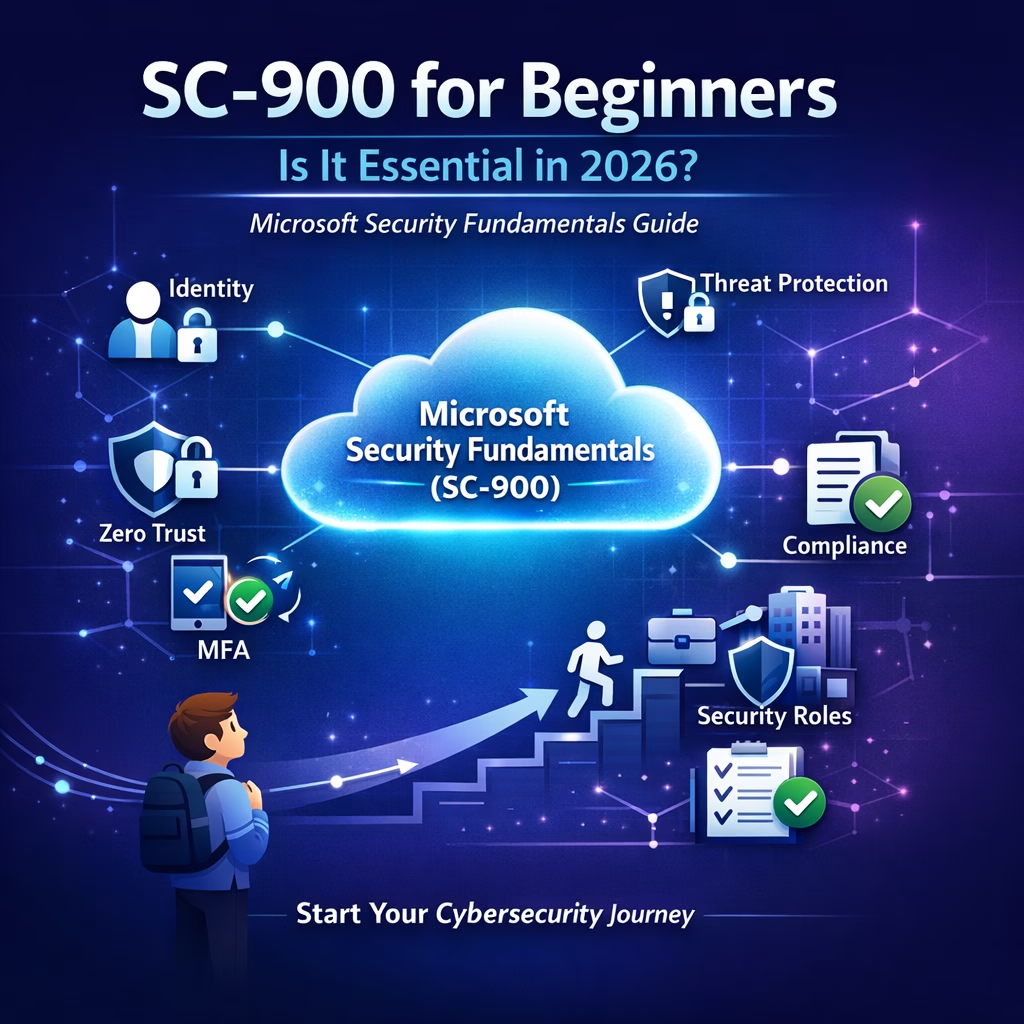
When people look at the Microsoft SC-900 (Security, Compliance, and Identity Fundamentals), the most common question is whether the SC-900 for beginners is actually worth the time. Most professionals skip this, but they end up missing the “why” behind their own security configurations. Here is the cost of that mistake. With cybersecurity demand at an all-time high in 2026, understanding these principles is a requirement for high-ROI roles. This guide breaks down if the SC-900 is the right starting point for your career.
This article breaks down who should take SC-900, comparing freshers vs working professionals, from a real-world IT and security perspective, not marketing claims.
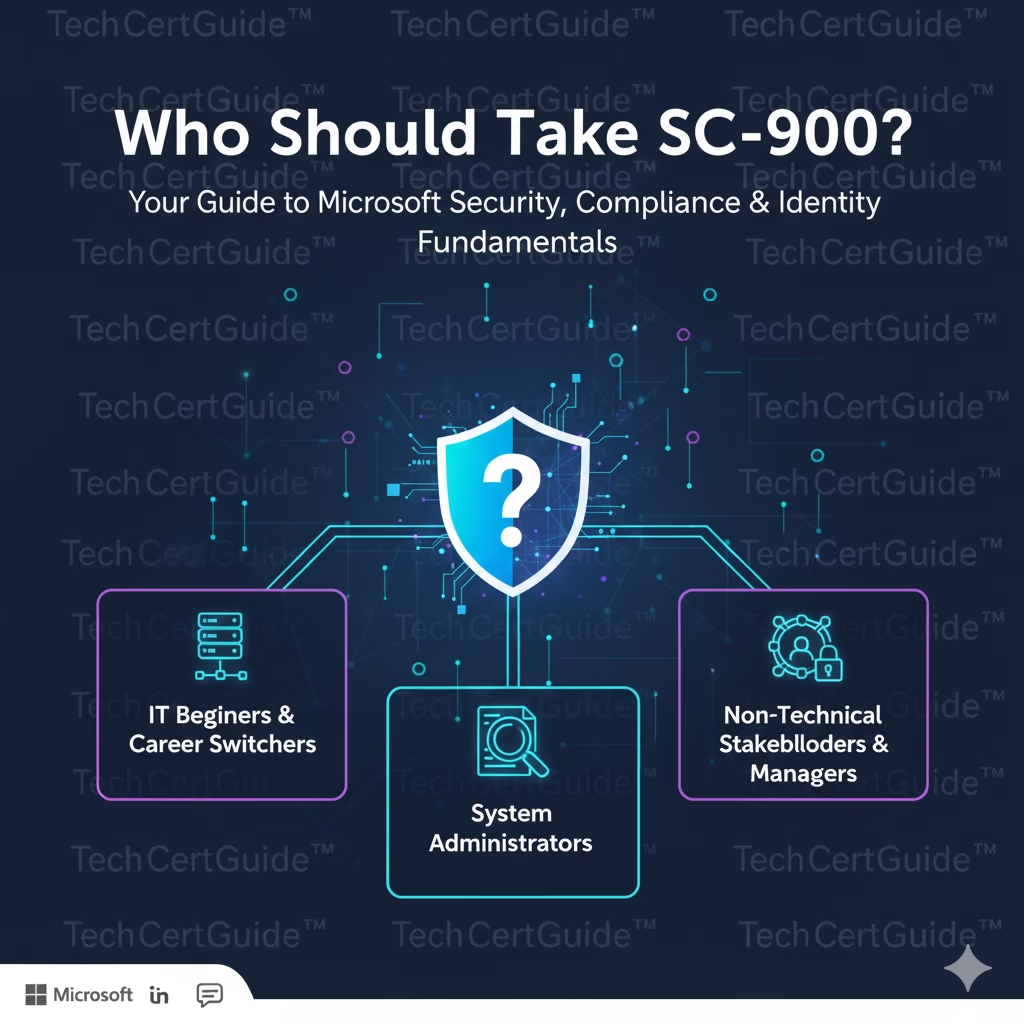
What SC-900 for Beginners Is Actually Designed For
Before comparing audiences, it’s important to understand what SC-900 represents.
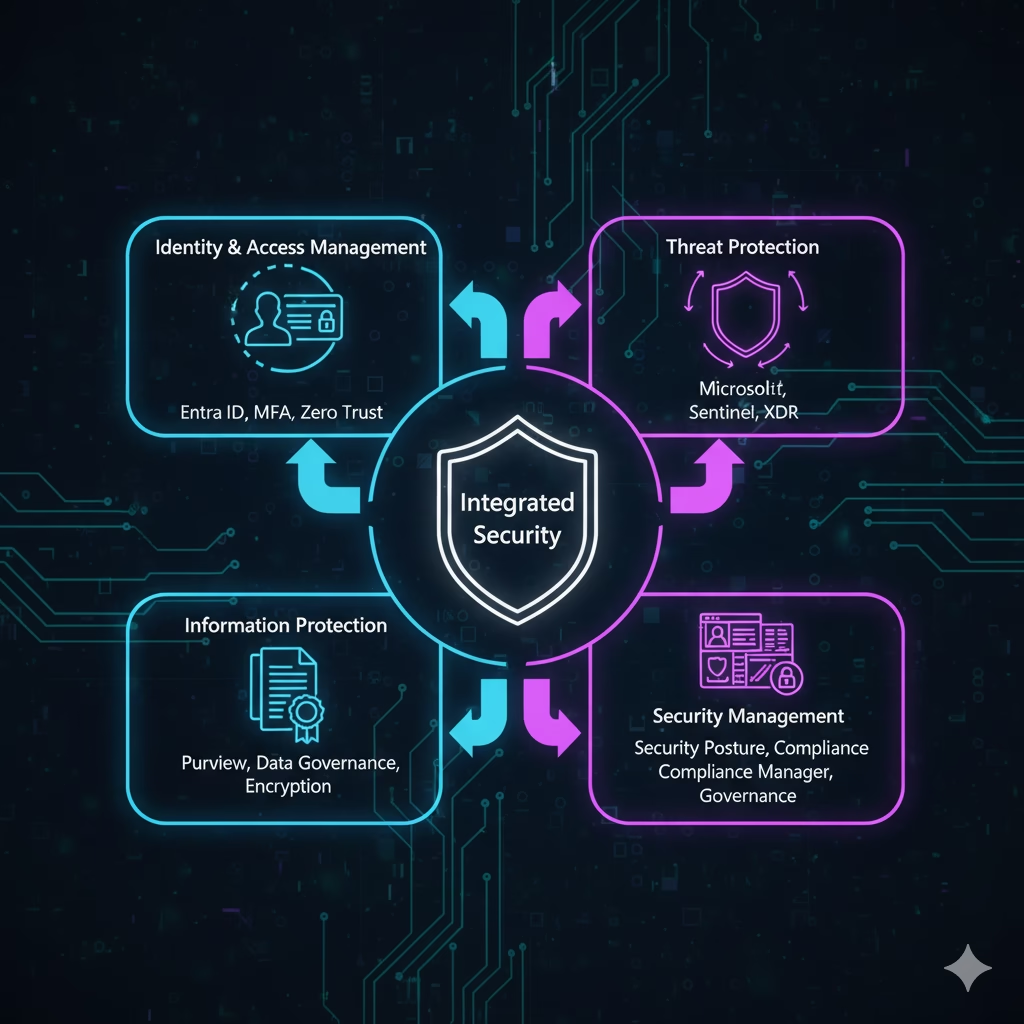
SC-900 validates conceptual understanding, not hands-on mastery. It focuses on:
- Identity and access management fundamentals
- Core Microsoft security concepts
- Zero Trust principles
- Compliance and data protection basics
- Security responsibilities in cloud environments
SC-900 explains how Microsoft thinks about security, not how to configure every setting.
This distinction matters when deciding who benefits most.
So, is Microsoft SC-900 good for complete beginners in 2026?
For freshers, SC-900 is often one of the best starting points in the Microsoft ecosystem.
Why SC-900 Works Well for Freshers
If you are new to IT, cloud, or cybersecurity, SC-900 helps you:
- Understand security concepts without deep technical barriers
- Learn modern security terminology used in real workplaces
- Build confidence before moving to advanced certifications
- Avoid learning tools blindly without understanding purpose
Unlike highly technical certifications, SC-900 does not assume prior experience with servers, networking, or scripting.
SC-900 Is Ideal for Freshers If You Are:
- A student exploring IT or cybersecurity
- A non-IT professional switching careers
- A helpdesk or support engineer at the start of your journey
- Someone preparing for entry-level Microsoft roles
For freshers, SC-900 provides structure. Instead of randomly learning “security topics,” you learn them in a way aligned with real enterprise environments.
What SC-900 Does NOT Do for Freshers
It’s important to be honest.
SC-900 alone:
- Will not make you a security engineer
- Will not replace hands-on experience
- Will not guarantee a job
However, it sets the foundation correctly, which is far more valuable early on than chasing advanced certifications too soon.
SC-900 for Working Professionals
This is where SC-900 is often misunderstood.
Many working professionals skip SC-900, assuming it is “too basic.” In practice, this is often a mistake.
SC-900 for System & Infrastructure Administrators
If you manage:
- Microsoft 365
- Azure resources
- Active Directory / Entra ID
- Endpoints and devices
SC-900 adds context to what you already do.
It helps you understand:
- Why MFA and Conditional Access exist
- Why identity is treated as the new perimeter
- Why compliance controls trigger security policies
- How Zero Trust applies to infrastructure decisions
Many infrastructure engineers implement controls without fully understanding risk models. SC-900 fills that gap.
SC-900 for Helpdesk, L1, and L2 Support Engineers
SC-900 is extremely valuable here.
It explains:
- Why are sign-ins blocked
- Why MFA prompts appear unexpectedly
- Why devices must be compliant
- Why data protection policies trigger alerts
This reduces:
- Escalations
- Misdiagnosis
- Trial-and-error troubleshooting
For support teams, SC-900 improves decision-making, not just ticket handling.
SC-900 for Compliance, Audit, and GRC Roles
SC-900 introduces platform concepts such as:
- Microsoft Purview
- Audit logs
- Data classification
- Compliance Manager
For non-technical professionals, SC-900 provides platform awareness without requiring engineering depth.
This is especially useful in Microsoft-centric organisations.
Key Takeaway: Many career-switchers struggle to find a starting point. By choosing the SC-900 for beginners, you gain a globally recognized foundation in identity and compliance that is highly relevant in 2026.
When SC-900 May NOT Be Necessary
SC-900 may be optional if:
- You already hold advanced Microsoft security certifications
- You work daily as a security engineer or IAM specialist
- You design Conditional Access and identity governance end-to-end
Even if you have some experience, SC-900 for beginners can serve as a vital refresher to align your technical skills with modern Microsoft Zero Trust standards.
Freshers vs Working Professionals: How SC-900 Fits Differently
The key difference is how SC-900 is used, not whether it is useful.
- Freshers use SC-900 to enter security conversations
- Working professionals use SC-900 to align and refine understanding
The same certification supports different career needs.
Common Mistake: Asking “Is SC-900 Too Basic?”
The better question is:
“Do I fully understand why Microsoft security controls exist?”
If the answer is not a confident yes, SC-900 still has value—regardless of experience level.
Many real-world security failures happen due to:
- Poor identity design
- Weak conceptual understanding
- Treating security tools as checkboxes
SC-900 addresses these issues at the foundation level.
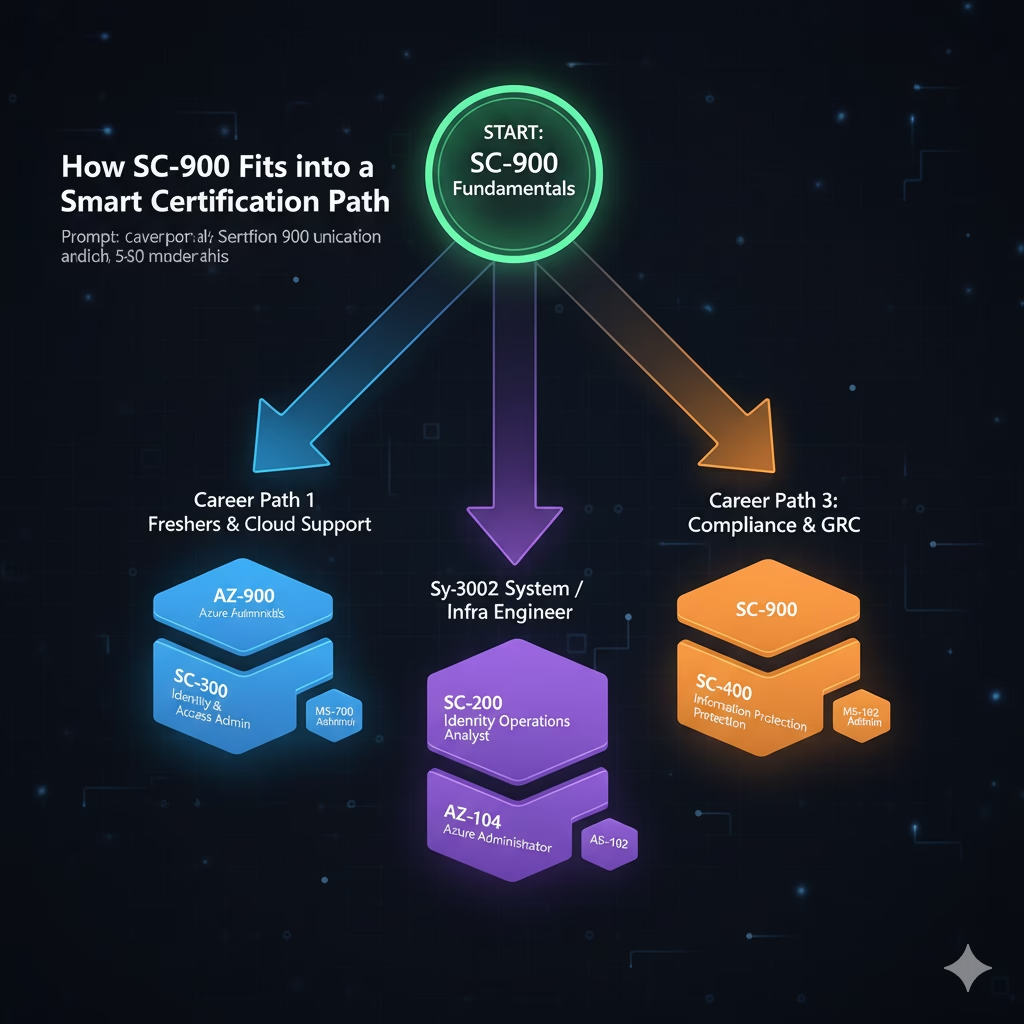
How SC-900 Fits into a Smart Certification Path
For Freshers
SC-900 → AZ-900 → SC-300
For System / Infra Engineers
SC-900 → SC-300 → SC-200
For Compliance & GRC
SC-900 → Purview-focused learning
SC-900 works best as a starting block, not a final destination.
Final Verdict: Who Should Take SC-900?
From a real-world perspective:
- Freshers should take SC-900 to build security awareness early
- Working professionals should take SC-900 to strengthen architectural understanding
- Microsoft-focused organisations benefit most from SC-900 alignment
SC-900 is not about becoming an expert.
It is about thinking correctly about security, identity, and compliance.
In modern IT environments, that mindset matters more than tool familiarity.
In summary, the value of this certification depends on your specific goals, but for those starting their journey, the answer is clear: SC-900 for beginners is a solid foundation. It provides the essential vocabulary needed to navigate the complex world of Microsoft security and identity solutions. By establishing this base early, you position yourself for higher-level certifications and more specialized, high-paying roles. Don’t view it as just another test; view it as the first strategic step in your 2026 cybersecurity roadmap.
Ultimately, the SC-900 for beginners remains the most strategic first step for anyone looking to build a career in cloud security.
Also, view our detailed guide on what SC-900 is to understand Microsoft Security, Compliance, and Identity fundamentals.
For official and up-to-date exam objectives, learning paths, and reference material, refer to Microsoft Learn’s SC-900 documentation.
What’s Next in the SC-900 Series
In the next post, we’ll cover:
Already mastered these fundamentals? You’re ready to dive deeper into the identity side of Microsoft’s security stack. SC-900 Identity Fundamentals: Why Identity Is the Foundation of Microsoft Security