SC-900 Identity Fundamentals: Why Identity is the New Security Perimeter
SC-900 identity fundamentals explain why identity is the foundation of Microsoft security in modern cloud-first environments.
When people think about cybersecurity, the first things that usually come to mind are firewalls, antivirus tools, or threat detection platforms. While these tools are important, modern security no longer starts with the network or devices.
It starts with identity.
This is why identity sits at the core of SC-900 (Microsoft Security, Compliance, and Identity Fundamentals) and why Microsoft consistently treats identity as the new security perimeter. Understanding this concept is critical—not just for passing the exam, but for building secure environments in the real world.
This article explains SC-900 identity fundamentals, why identity comes first in Microsoft’s security model, and how this mindset applies to day-to-day IT and security operations.
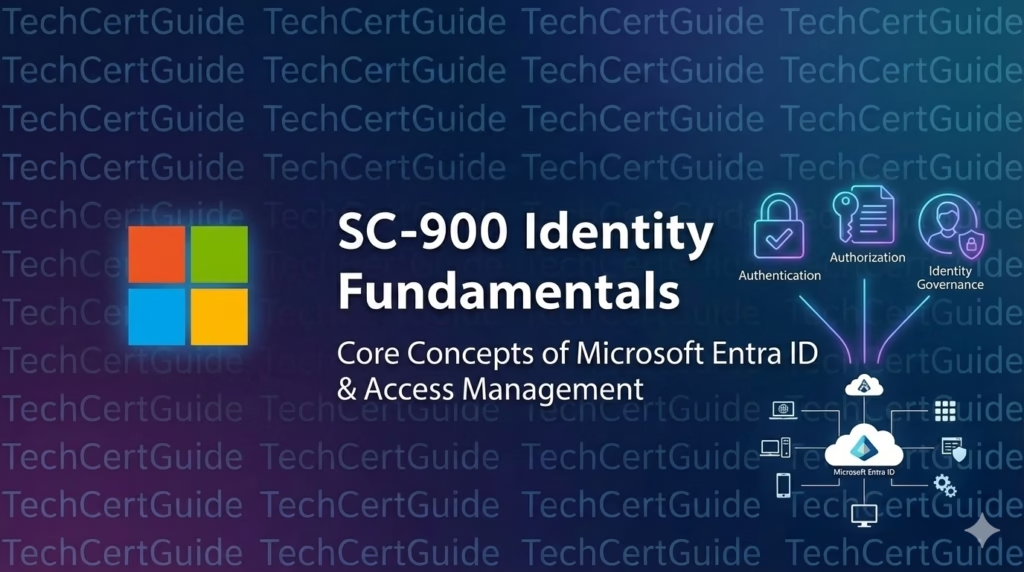
What “Identity” Really Means in Microsoft Security
In the Microsoft ecosystem, identity is not limited to a username and password.
An identity can represent:
- A user
- A device
- An application
- A workload or service
Each identity becomes a decision point for access, trust, and protection.
In modern environments built on Microsoft cloud services, users no longer sit behind a fixed corporate network. They access applications from:
- Different locations
- Personal and corporate devices
- Various networks
Because of this shift, identity replaces the network boundary as the primary security control.
Microsoft Entra ID: The Core Identity Platform
At the center of Microsoft’s identity strategy is Microsoft Entra ID (formerly Azure Active Directory).
Microsoft Entra ID acts as:
- The authentication authority
- The authorization engine
- The foundation for Zero Trust controls
Every sign-in, access request, and policy decision flows through identity.
From an architectural perspective, Entra ID answers four critical questions:
- Who is requesting access?
- What are they trying to access?
- From where are they accessing it?
- Under what conditions should access be allowed?
SC-900 emphasizes understanding these concepts rather than memorizing configuration steps.
Authentication vs Authorization: A Core SC-900 Concept
One of the most important identity fundamentals tested in SC-900 is the distinction between authentication and authorization.
Authentication
Authentication verifies who you are.
Examples include:
- Username and password
- Multi-Factor Authentication (MFA)
- Certificate-based authentication
Authorization
Authorization determines what you can access after authentication succeeds.
Examples include:
- Role assignments
- Application permissions
- Conditional policies
Many real-world security failures occur when authentication is strong, but authorization is overly permissive. SC-900 reinforces this separation because it directly affects how access decisions are designed.
Why Identity Comes Before Tools
A common mistake in security design is deploying tools without fixing identity first.
Consider these scenarios:
- MFA enabled, but excluded for administrators
- Conditional Access deployed without understanding user roles
- Security alerts ignored because identity context is missing
In each case, the issue is not the lack of security tools, but weak identity foundations.
SC-900 positions identity first because:
- Every security control depends on identity signals
- Threat detection relies on sign-in behavior
- Compliance enforcement starts with user and data ownership
Without strong identity controls, advanced security platforms cannot work effectively.
Identity and Zero Trust: The Foundational Relationship
SC-900 repeatedly connects identity with the Zero Trust security model.
Zero Trust is based on three principles:
- Never trust implicitly
- Always verify
- Assume breach
Identity enables Zero Trust by allowing continuous evaluation of:
- User risk
- Device state
- Location and behavior
Instead of trusting access based on network location, Microsoft evaluates identity signals in real time. This approach reflects how modern threats actually occur—through compromised credentials rather than perimeter breaches.
Identity in Day-to-Day IT Operations
For many IT professionals, identity is already part of daily work—even if it is not recognized as such.
Examples include:
- MFA prompts during sign-in
- Access blocked due to policy violations
- Device compliance requirements
- Password resets and account lockouts
SC-900 helps connect these operational tasks to security intent. Instead of seeing identity-related issues as interruptions, professionals begin to understand them as protective controls.
This shift in thinking improves troubleshooting, reduces misconfigurations, and strengthens collaboration between infrastructure and security teams.
Identity as the Foundation for Compliance
Identity is not only about security—it is also critical for compliance.
Compliance requirements often depend on:
- Who accessed data
- When access occurred
- What actions were performed
Without strong identity tracking, audit logs lose meaning.
SC-900 introduces how identity supports:
- Audit trails
- Data access accountability
- Policy enforcement
This explains why compliance tools are built on top of identity platforms rather than operating independently.
Common Identity Misconceptions Addressed by SC-900
SC-900 helps correct several common misconceptions:
- “Identity is just login management.”
In reality, identity drives access decisions across users, devices, and apps. - “Security tools can compensate for weak identity.”
They cannot. Identity failures undermine all other controls. - “Identity matters only to security teams.”
Identity affects infrastructure, compliance, and end-user experience.
Understanding these points early prevents architectural mistakes later.
Why SC-900 Starts With Identity Fundamentals
SC-900 is not designed to make you an identity engineer.
It is designed to help you think correctly about security.
By starting with identity fundamentals, SC-900 ensures that learners understand:
- Why access controls exist
- Why Zero Trust is necessary
- Why compliance depends on identity visibility
This foundational knowledge prepares you for advanced certifications and real-world responsibilities.
While understanding the basic pillars of Microsoft security is vital, you’ll eventually need to master how these principles are applied to identity. Need help with identity signals? Read our deep dive on MFA and Identity Protection. This guide covers the critical ‘Sign-in Risk vs. User Risk’ concepts that are frequent topics on the actual exam.
Final Thoughts: Identity Is the New Security Perimeter
Modern security is no longer about defending a physical network.
It is about protecting identities wherever they operate.
SC-900 identity fundamentals teach a mindset that applies far beyond the exam:
- Secure access starts with identity
- Trust must be verified continuously
- Security and compliance depend on visibility
Whether you are a fresher, system administrator, or working professional, understanding identity as the foundation of Microsoft security is essential in today’s cloud-first environments.
Also, view our detailed guide on what is SC-900 to understand Microsoft Security, Compliance, and Identity fundamentals.
For official and up-to-date exam objectives, learning paths, and reference material, refer to Microsoft Learn’s SC-900 documentation.
What’s Next in the SC-900 Series
In the next post, we’ll cover:
Authentication vs Authorization in SC-900: Understanding Access Decisions Clearly
This will build directly on the identity concepts introduced here.
1 thought on “SC-900 Identity Fundamentals: A Clear Guide to Why Identity Is the Foundation of Microsoft Security”