
Why are these the Best IT certifications for beginners in 2026?
Stop spending weeks over-researching your first step into tech. As a Senior IT Infrastructure Engineer, I see beginners take the wrong certifications every day—wasting time on outdated exams that don’t match the 2026 job market.
Choosing the right starting point isn’t just about picking a famous vendor like Microsoft or Cisco; it’s about aligning your path with where the industry is heading. In this guide, I’ve cut through the hype to provide the exact roadmap I would use if I were starting my career today. Whether you are eyeing Cloud, Security, or Networking, here are the top IT certifications for beginners that actually carry weight in 2026.
This guide explains the top IT certifications for beginners in 2026, grouped by career area, and includes real vendor examples to help you understand which certifications fit your goals—without hype or confusion.
If you are completely new to IT, start with our guide on how to start a career in IT certifications.
Beginners often feel overwhelmed by the sheer number of certification choices. To help you visualize how these fit together, I’ve broken down the major entry-level certs of 2026 into four logical career paths.
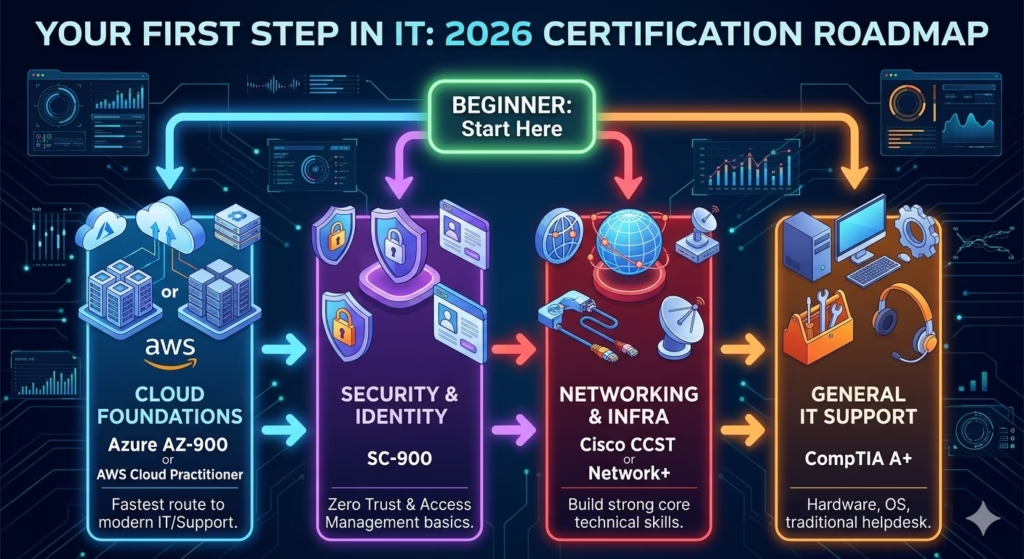
Why IT Certifications Matter for Beginners
For beginners, certifications are not about job titles or salaries. They provide:
- Structured learning paths
- Clear introduction to IT concepts
- Direction for career exploration
- Confidence to move into advanced learning
When chosen wisely, certifications help you build a strong foundation for long-term IT growth.
Choosing the best IT certifications for beginners in 2026 helps build strong fundamentals without overwhelming technical complexity.
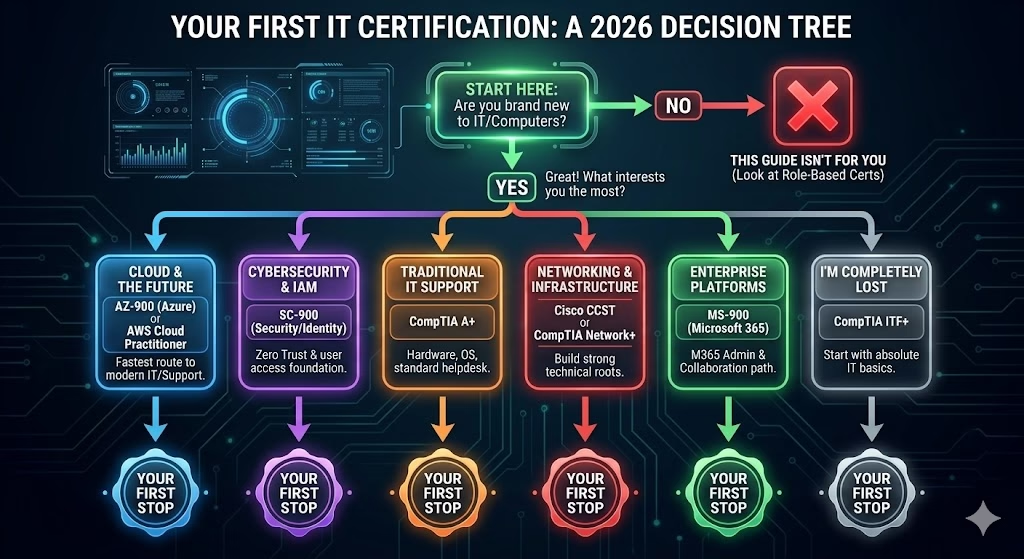
What Makes a Certification Beginner-Friendly? Choosing the Right Entry-Level Technical Credentials for 2026
A beginner-friendly certification usually:
- Has no strict technical prerequisites
- Focuses on concepts over deep configuration
- Covers real-world use cases
- Applies across multiple IT roles
The certifications below meet these criteria.
The 90-Day Roadmap: How Long Will It Take?
Not all beginner certifications are created equal in terms of effort. Based on my experience in infrastructure, I’ve grouped these by the time investment required:
- The “Quick Wins” (1–2 Weekends): These are awareness-level certs like AZ-900 or MS-900. They focus on “what” and “why.”
- The “Deep Foundations” (4–6 Weeks): These require hands-on study, like CompTIA A+ or Cisco CCST. They focus on “how.”
1. IT Fundamentals Certifications
IT fundamentals certifications are ideal for learners who are completely new to IT.
What you learn:
- How computers and operating systems work
- Basic networking concepts
- Introductory security principles
- Software and hardware fundamentals
Examples:
- CompTIA IT Fundamentals (ITF+)
- Entry-level IT fundamentals certifications from major vendors
Who should choose this:
- Students with no technical background
- Career switchers from non-IT roles
- Learners are unsure which IT path to follow
This is often the best starting point before moving into cloud, security, or networking.
2. Cloud Fundamentals Certifications
Cloud computing is now a core requirement in modern IT roles. Cloud fundamentals certifications introduce cloud concepts without deep technical skills.
What you learn:
- What cloud computing is
- IaaS, PaaS, and SaaS models
- Shared responsibility model
- Cloud pricing and compliance basics
Examples:
Who should choose this:
- Beginners interested in cloud platforms
- IT support and junior admin roles
- Learners planning future cloud or security careers
Choosing a vendor is the hardest part. I’ve compared the big three in my Azure vs. AWS vs. Google Cloud guide
💡 Lokesh’s Quick Verdict:

Choose Azure (AZ-900): If you are targeting Corporate, Healthcare, or Finance sectors (Enterprise focus).

Choose AWS (Cloud Practitioner): If you are targeting Tech Startups or E-commerce companies.
Cloud fundamentals certifications are excellent entry points regardless of the vendor you choose.
3. Security Fundamentals Certifications
Security fundamentals certifications focus on core security concepts, not advanced tools or penetration testing.
What you learn:
- Security principles and threats
- Identity and access management basics
- Data protection and compliance concepts
- Risk awareness
Examples:
- Microsoft Security, Compliance, and Identity Fundamentals (SC-900)
- CompTIA Security+ (for learners with some basic IT knowledge)
Who should choose this:
- Beginners interested in cybersecurity
- IT administrators and support professionals
- Learners planning to work with cloud or identity platforms
“If you’re wondering if the security path is worth the investment, check out my deep dive: Is SC-900 Worth It in 2026?“
Security fundamentals build a strong base for more advanced security roles.
4. Networking Fundamentals Certifications
Networking remains a foundational IT skill even in cloud-first environments.
What you learn:
- How devices communicate
- IP addressing and protocols
- Routing and switching concepts
- Network security basics
Examples:
Who should choose this:
- Beginners interested in infrastructure
- Future cloud or security professionals
- Learners who want strong technical fundamentals
Networking knowledge makes cloud and security topics easier to understand.
5. Enterprise & Productivity Platform Fundamentals
Enterprise environments rely heavily on productivity, identity, and collaboration platforms.
What you learn:
- Enterprise productivity services
- Identity and access concepts
- Security and compliance basics
- Cloud-based collaboration tools
Examples:
Who should choose this:
- Beginners interested in enterprise IT
- Support and junior admin roles
- Learners planning to move into identity or security paths
This certification pairs well with cloud and security fundamentals.
6. Identity and Access Management (IAM) Fundamentals
Identity is at the core of modern IT and cloud security.
What you learn:
- Authentication vs authorization
- Identity lifecycle management
- Access control concepts
- Zero Trust principles
Examples:
- IAM-focused learning paths aligned with Microsoft Entra, cloud identity platforms, and security fundamentals certifications
Who should choose this:
- Beginners interested in security or cloud
- IT administrators managing users and access
- Learners preparing for modern IT roles
IAM knowledge is increasingly important across all IT domains.
7. IT Service Management & Process Fundamentals
Not all IT roles are deeply technical. Service management certifications focus on how IT teams operate.
What you learn:
- Incident, problem, and change management
- IT service lifecycle concepts
- Process-driven IT operations
Examples:
Who should choose this:
- Beginners interested in IT operations
- Non-technical professionals working with IT teams
- Learners aiming for service management roles
These certifications provide insight into real-world IT operations.
How to Choose the Right Certification from This List
You don’t need to complete every certification mentioned. Choose based on your interests:
- Unsure about IT → CompTIA ITF+
- Interested in cloud → AZ-900, AWS Cloud Practitioner, or Google Cloud Digital Leader
- Interested in security → SC-900 or CompTIA Security+
- Interested in networking → CCST or Network+
- Enterprise IT roles → MS-900
Start with one certification, then grow gradually.
2026 Comparison: Certification Cost vs. Career ROI
| Certification | Official Exam Fee (USD) | Estimated Cost (INR) | 2026 Market Demand | Best For |
| AZ-900 (Azure) | $99 | ~₹3,691 | Extreme | Large Enterprise & Cloud Support |
| AWS Cloud Prac. | $100 | ~₹8,400 | Extreme | Tech Startups & Modern Cloud Roles |
| SC-900 (Security) | $99 | ~₹3,691 | Very High | Identity & Security Operations |
| CompTIA A+ | $530 ($265 x 2) | ~₹44,000 | High | Traditional Helpdesk & Field Support |
| Cisco CCST | $125 | ~₹10,500 | High | Core Networking & Entry SecOps |
| MS-900 (M365) | $99 | ~₹3,691 | High | Enterprise Admin & Productivity |
The top IT certifications for beginners in 2026 are designed to build confidence and core knowledge before specialization.
How Many Certifications Should a Beginner Do?
A smart beginner approach:
- Complete one fundamentals certification
- Practice concepts through labs or demos
- Decide on a specialization
- Move to role-based certifications
Depth of learning matters more than the number of certificates.
Certifications vs Hands-On Practice
Certifications are most effective when combined with:
- Hands-on labs
- Practice environments
- Real-world scenarios
Practice turns theory into understanding.
Whether you are looking for foundational IT training paths or specific role-based entry-level credentials, the roadmap above ensures you aren't wasting time on outdated exams.In summary, starting with the best IT certifications for beginners in 2026 provides the structure needed to thrive. By focusing on these industry-recognized starter certs, you bridge the gap between being a complete novice and a qualified infrastructure professional.
Final Thoughts
In 2025, IT certifications will remain one of the most effective ways for beginners to enter the IT field when chosen thoughtfully. Certifications from Microsoft, AWS, Google Cloud, Cisco, and CompTIA all have beginner-friendly options.
Choosing the best IT certifications for beginners in 2026 is the first step toward a high-paying infrastructure career. Stick to the roadmap, build your labs, and remember: the best time to start was yesterday; the second-best time is today.
Choosing the best IT certifications for beginners in 2026 depends on your specific goals
Understanding azure vs aws vs google cloud for beginners becomes much easier when you compare job demand, learning paths, and real-world usage.
If you are new to IT, you may also find our guide on how to start a career in IT certifications helpful.
Really comprehensive guide! I agree that AWS Cloud Practitioner is the best starting point for cloud certifications. The combination of low difficulty and high market demand makes it a no-brainer.
One thing I’d add — practice exams are essential for any certification. I’ve been using ExamCert (examcert.app) for my AWS and Azure prep, and the timed exam simulations helped me get comfortable with the actual test format. Their question explanations are really detailed too.
For anyone starting out, I’d suggest picking ONE certification path and focusing on it completely rather than spreading yourself thin across multiple vendors. You can always branch out after getting that first cert under your belt.
Thanks a lot, Andy! Really appreciate your insights!
Completely agree with you practice exams make a huge difference, especially for understanding the actual exam pattern and improving time management.
Also, great point on focusing on one certification path first. That’s exactly what many beginners struggle with, and your advice will definitely help them avoid confusion.
Thanks again for sharing your experience this adds real value to the community!