One of the biggest security risks in any organisation is unclear access.
When users have permissions based on convenience instead of responsibility, security quickly becomes difficult to manage, audit, and trust.
This is why Role-Based Access Control (RBAC) is a core concept in SC-900 (Microsoft Security, Compliance, and Identity Fundamentals). Understanding RBAC in SC-900 is essential for effective security management.
RBAC ensures that access is structured, predictable, and aligned to job roles, not individuals.
This article explains RBAC in SC-900 clearly—without configuration, tools, or admin steps.
Incorporating RBAC in SC-900 practices helps ensure that permissions are managed correctly across your organization.
Learning Objectives
After completing this guide, you will be able to:
- Explain the purpose of Role-Based Access Control (RBAC).
- Describe how RBAC structures access based on job roles.
- Identify how RBAC supports least privilege and governance.
- Differentiate RBAC from direct permission assignment.
Why SC-900 Covers RBAC
Modern environments scale quickly:
- Users join and leave
- Roles change
- Applications multiply
- Compliance requirements increase
Managing access user-by-user does not scale.
SC-900 introduces RBAC to show how organisations:
- Assign permissions consistently
- Reduce excessive access
- Support Least Privilege
- Simplify governance and audits
RBAC is foundational to identity-first security.
What Is Role-Based Access Control (RBAC) in SC-900?
Role-Based Access Control is an access model where:
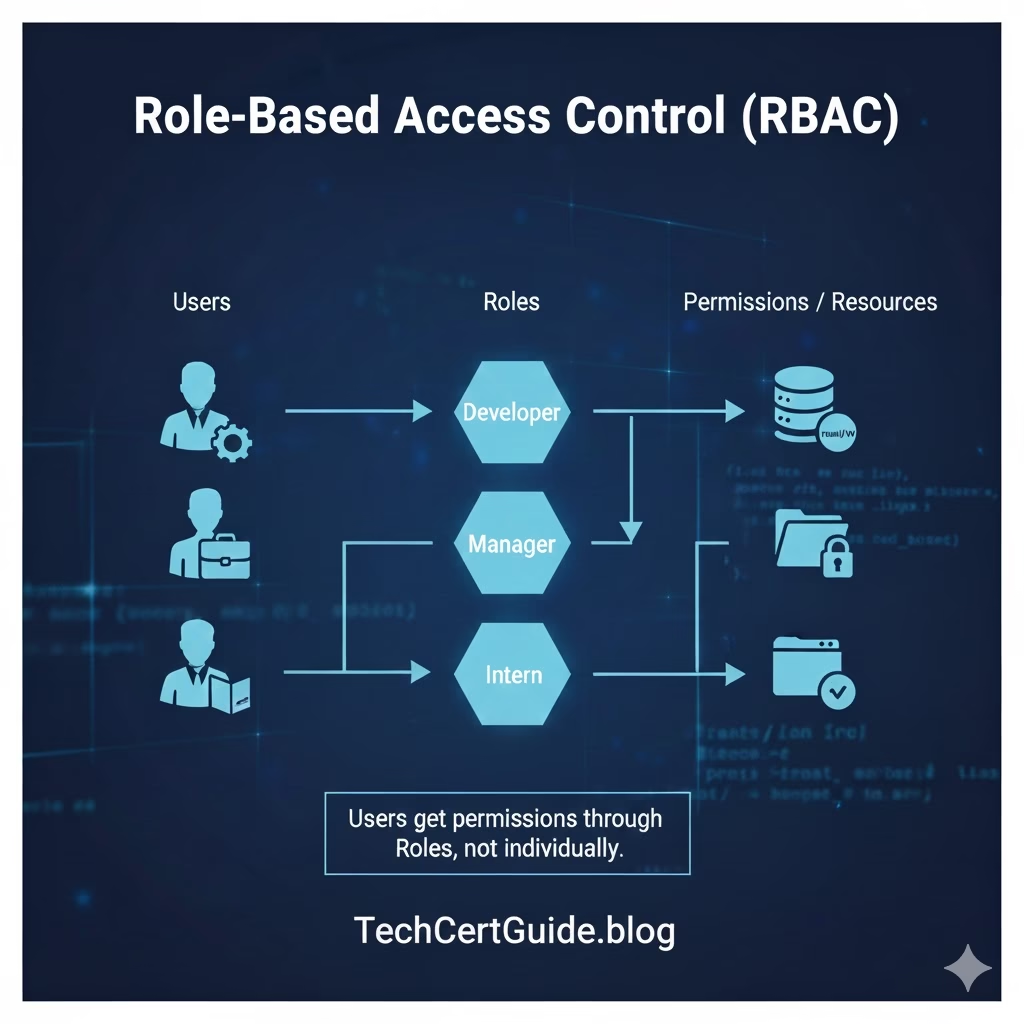
Permissions are assigned to roles, and users are assigned to those roles.
Instead of asking:
- What does this user need access to?
RBAC asks:
- What access does this role require?
SC-900 focuses on understanding this conceptual shift.
How RBAC Works (Simple View)
RBAC has three basic components:
- Roles – Define what actions are allowed
- Permissions – Define access to resources
- Users – Are assigned to roles
Access is granted because of a role, not because of individual decisions.
This structure reduces inconsistency and human error.
Why RBAC Improves Security
RBAC improves security by:
- Preventing over-permissioning
- Supporting Least Privilege Access
- Making access predictable
- Reducing manual access decisions
When roles are well-defined, users automatically receive:
- The access they need
- No more than required
This aligns directly with Zero Trust principles.
RBAC and Least Privilege (Important Link)
RBAC is one of the main ways Least Privilege is enforced.
Instead of granting broad access:
- Roles are designed with minimal permissions
- Users inherit only what the role allows
SC-900 connects RBAC with:
- Least Privilege
- Zero Trust
- Identity governance
Understanding this relationship is exam-relevant.
RBAC in Identity-Driven Security
In Microsoft environments, identity is the primary security perimeter.
RBAC helps ensure that:
- Authentication confirms who you are
- RBAC defines what you can do
This separation is important:
- Authentication ≠ Authorisation
- RBAC belongs to authorisation
SC-900 often tests whether candidates understand this distinction.
RBAC vs Direct Permissions
Direct Permissions (Not Recommended)
- Permissions assigned user-by-user
- Difficult to audit
- High risk of permission creep
RBAC Model (Preferred)
- Permissions grouped into roles
- Easy to review and audit
- Scales with organisation growth
SC-900 highlights RBAC as the structured and scalable approach.
RBAC Supports Governance and Compliance
From a GRC perspective, RBAC:
- Simplifies access reviews
- Supports separation of duties
- Helps demonstrate compliance
- Reduces audit findings
Auditors often ask:
Who has access, and why?
RBAC provides a clear, defensible answer.
What SC-900 Does NOT Expect You to Know About RBAC
SC-900 does not require:
- Creating custom roles
- Assigning permissions in portals
- Managing role inheritance
- Troubleshooting access issues
The exam tests understanding, not implementation.
Common Misconceptions About RBAC
SC-900 helps correct these myths:
- “RBAC is only for admins.”
RBAC applies to all users and systems. - “RBAC removes flexibility.”
RBAC increases consistency while reducing risk. - “RBAC replaces authentication.”
RBAC controls authorisation, not identity verification.
SC-900 Exam Tip
For SC-900:
- Know what RBAC is
- Understand why it’s used
- Link it to Least Privilege and Zero Trust
- Avoid thinking in terms of configuration
If you can explain RBAC in simple words, you are exam-ready.
Final Thoughts: Structure Reduces Risk
Security problems often arise from unstructured access.
RBAC brings:
- Order
- Consistency
- Accountability
By structuring access around roles instead of individuals, organisations reduce risk while improving manageability.
SC-900 introduces RBAC to help learners understand how modern access control is designed, not just enforced.
Also, view our detailed guide on what is SC-900 to understand Microsoft Security, Compliance, and Identity fundamentals.
For official and up-to-date exam objectives, learning paths, and reference material, refer to Microsoft Learn’s SC-900 documentation.
What’s Next in the SC-900 Series
Next, we’ll cover:
Identity Lifecycle & Access Reviews in SC-900: Managing Access Over Time
2 thoughts on “Role-Based Access Control (RBAC) in SC-900: How Access Is Structured Securely”