Learning Objectives
After completing this guide, you will be able to:
- Explain the purpose of data classification.
- Describe how sensitivity labels protect data.
- Identify examples of sensitivity levels.
- Differentiate data classification from access control.
Data Classification & Sensitivity Labels in SC-900
Data Classification & Sensitivity Labels in SC-900 explain how organisations protect information based on its value and risk, not just where it is stored.
Not all data is equal.
A public document, an internal email, and a confidential customer record should not be treated the same way. SC-900 introduces data classification and sensitivity labels to help learners understand how protection is applied intelligently and consistently across Microsoft environments.
This article explains the concept clearly, without configuration steps, exactly as expected for SC-900 (Microsoft Security, Compliance, and Identity Fundamentals).
Why SC-900 Covers Data Classification
Security controls often fail when they are applied uniformly to all data.
In real environments:
- Some data can be shared freely
- Some data must stay internal
- Some data requires strict protection
SC-900 includes data classification to show how organisations:
- Identify sensitive information
- Apply appropriate protection
- Reduce accidental data exposure
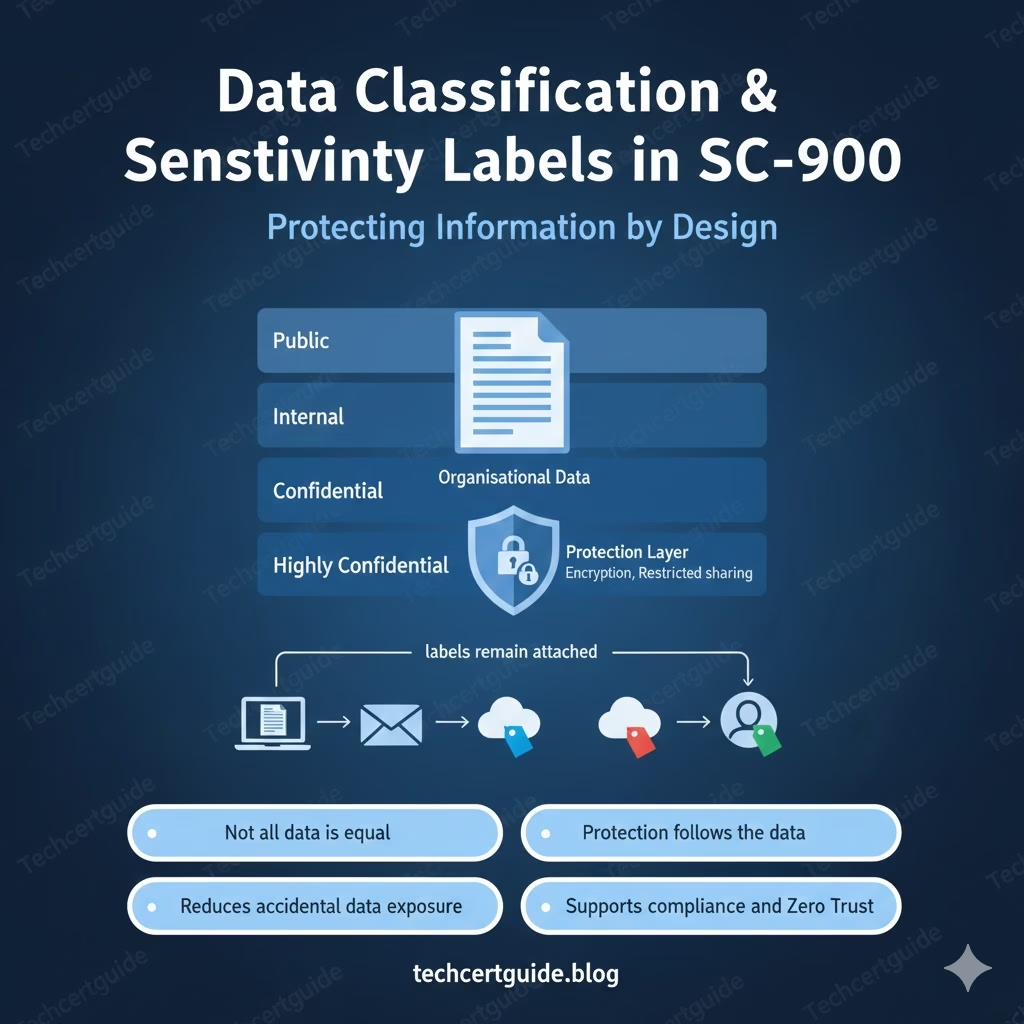
What Is Data Classification? (SC-900 View)
At SC-900 level, data classification means:
Categorising data based on its sensitivity, value, and impact if exposed.
Instead of treating all data the same, organisations assign categories such as:
- Public
- Internal
- Confidential
- Highly confidential
This classification becomes the foundation for data protection.
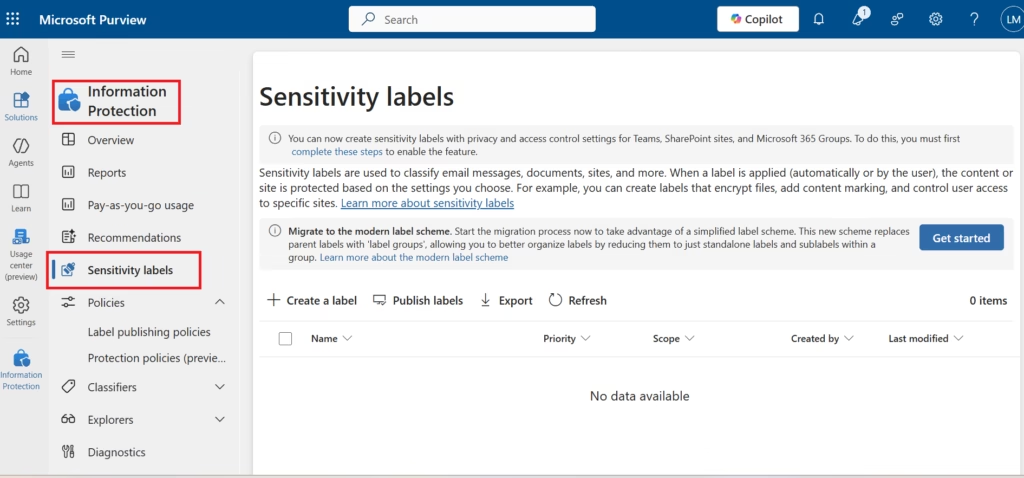
Fig: Microsoft Purview sensitivity labels enable organisations to classify and protect data across Microsoft 365 services.
Why Data Classification Matters
Without classification:
- Users may overshare sensitive data
- Security teams lack context
- Compliance becomes reactive
With classification:
- Protection is applied automatically
- Users are guided to handle data correctly
- Policies scale across platforms
SC-900 focuses on why classification enables smarter security decisions.
What Are Sensitivity Labels? (SC-900 View)
Sensitivity labels are used to apply protection to data based on its classification.
At SC-900 level, they are best understood as:
Labels that tell systems how data should be handled, shared, and protected.
They travel with the data and remain effective even when data moves.
How Sensitivity Labels Protect Data
Sensitivity labels can:
- Indicate how sensitive data is
- Apply protection automatically
- Guide users during data creation
SC-900 emphasises the concept of persistent protection, not technical enforcement.
Examples of Sensitivity Levels
SC-900 commonly uses simple examples:
| Classification | Example |
|---|---|
| Public | Marketing brochures |
| Internal | Internal policies |
| Confidential | Customer data |
| Highly Confidential | Financial or legal records |
The goal is to understand why different data requires different protection, not memorise labels.
Data Classification vs Access Control (Important Distinction)
SC-900 makes a clear distinction:
- Access control → Who can access data
- Data classification → How data is protected after access
Even authorised users should handle sensitive data carefully.
This reinforces the idea that security does not end at sign-in.
Sensitivity Labels and User Behaviour
A key SC-900 concept is user guidance.
Labels help users:
- Understand data sensitivity
- Make better sharing decisions
- Reduce accidental data leaks
This reduces reliance on training alone.
Data Classification and Compliance
From a compliance perspective, classification helps:
- Meet regulatory requirements
- Support audits
- Demonstrate accountability
SC-900 connects data classification with compliance tools like Microsoft Purview, but stays at a conceptual level.
Data Classification and Zero Trust
Zero Trust controls access.
Data classification controls usage and protection.
Together, they ensure:
- Data is protected before and after access
- Risk is reduced even when users are trusted
This conceptual link is exam-relevant.
What SC-900 Does NOT Expect You to Know
SC-900 does not require:
- Creating labels
- Publishing policies
- Configuring automatic classification
- Troubleshooting label behaviour
The exam tests understanding of purpose, not configuration.
Common Misconceptions About Data Classification
SC-900 helps correct these myths:
- “Only compliance teams care about labels.”
Everyone who handles data is involved. - “Labels restrict productivity.”
Labels enable safe collaboration. - “Classification replaces security.”
It complements security controls.
SC-900 Exam Tip
For SC-900:
- Know what data classification is
- Understand what sensitivity labels do
- Recognise why protection should follow data
- Avoid thinking in technical implementation terms
If you can explain why data protection should be data-centric, you’re exam-ready.
Final Thoughts: Protect Data by Understanding It
Strong security starts with understanding what you are protecting.
By classifying data and applying sensitivity labels, organisations:
- Reduce accidental exposure
- Apply protection consistently
- Support compliance by design
SC-900 introduces these concepts to ensure learners understand how modern data protection is proactive, not reactive.
Also, view our detailed guide on what is SC-900 to understand Microsoft Security, Compliance, and Identity fundamentals.
For official and up-to-date exam objectives, learning paths, and reference material, refer to Microsoft Learn’s SC-900 documentation.
What’s Next in the SC-900 Series
Next, we’ll cover:
Data Loss Prevention (DLP) in SC-900: Preventing Accidental Data Leakage