Identity Lifecycle & Access Reviews in SC-900: Managing Access from Joiner to Leaver
Identity Lifecycle & Access Reviews in SC-900 explain how organisations manage access as users join, change roles, and leave. Access control is not a one-time decision. Users move between roles, take on temporary responsibilities, and eventually exit the organisation, making lifecycle-based access management critical for security and compliance. Users join organisations, change roles, take on ...
Read the full article Role-Based Access Control (RBAC) in SC-900: How Access Is Structured Securely
One of the biggest security risks in any organisation is unclear access. When users have permissions based on convenience instead of responsibility, security quickly becomes difficult to manage, audit, and trust. This is why Role-Based Access Control (RBAC) is a core concept in SC-900 (Microsoft Security, Compliance, and Identity Fundamentals). Understanding RBAC in SC-900 is ...
Read the full article Identity Types in SC-900: Human, Workload, Device, and Agent Identities Explained
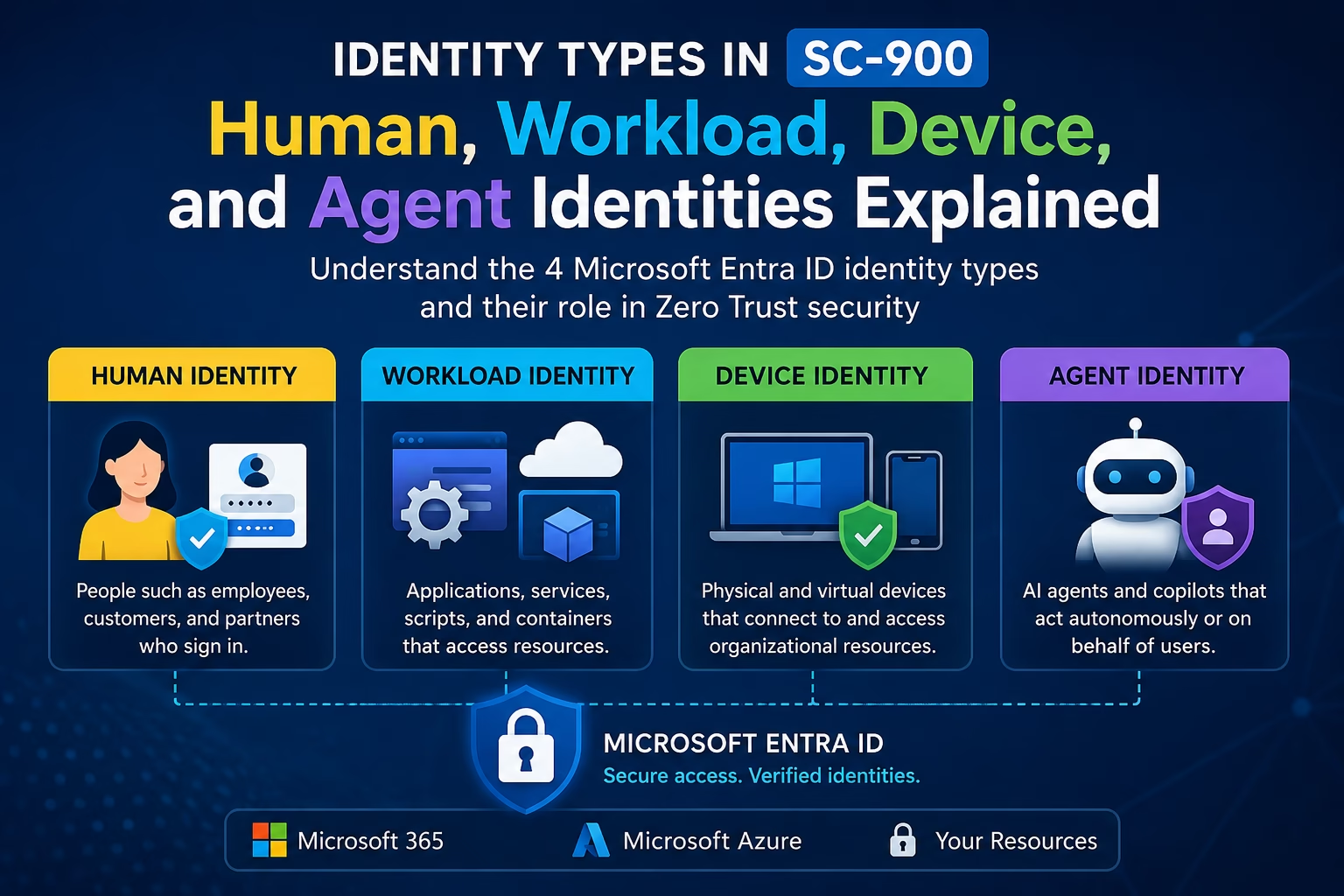
Identity Types in SC-900 go far beyond traditional user accounts. In modern cloud security, Microsoft identity concepts include human identities, workload identities, device identities, and agent identities. When most people hear the word identity, they think of a user account. However, understanding the different identity types in SC-900 is important for learning how Microsoft Entra ...
Read the full article Microsoft Entra ID Overview in SC-900: Understanding Microsoft’s Identity Platform
Learning Objectives After completing this guide, you will be able to: Microsoft Entra ID Overview in SC-900 Modern security starts with identity. In cloud and hybrid environments, networks are no longer the primary boundary. Users access applications from anywhere, on multiple devices, using cloud services that sit outside traditional perimeters. This is why Microsoft Entra ...
Read the full article GRC Fundamentals in SC-900: Understanding Governance, Risk, and Compliance Clearly
Learning Objectives After completing this guide, you will be able to: GRC Fundamentals in SC-900 Security is not only about blocking attacks.It is also about making the right decisions, managing risk, and meeting regulatory obligations. This is where GRC Governance, Risk, and Compliance becomes essential. In SC-900 (Microsoft Security, Compliance, and Identity Fundamentals), GRC is ...
Read the full article Encryption vs Hashing in SC-900: Understanding Data Protection the Right Way
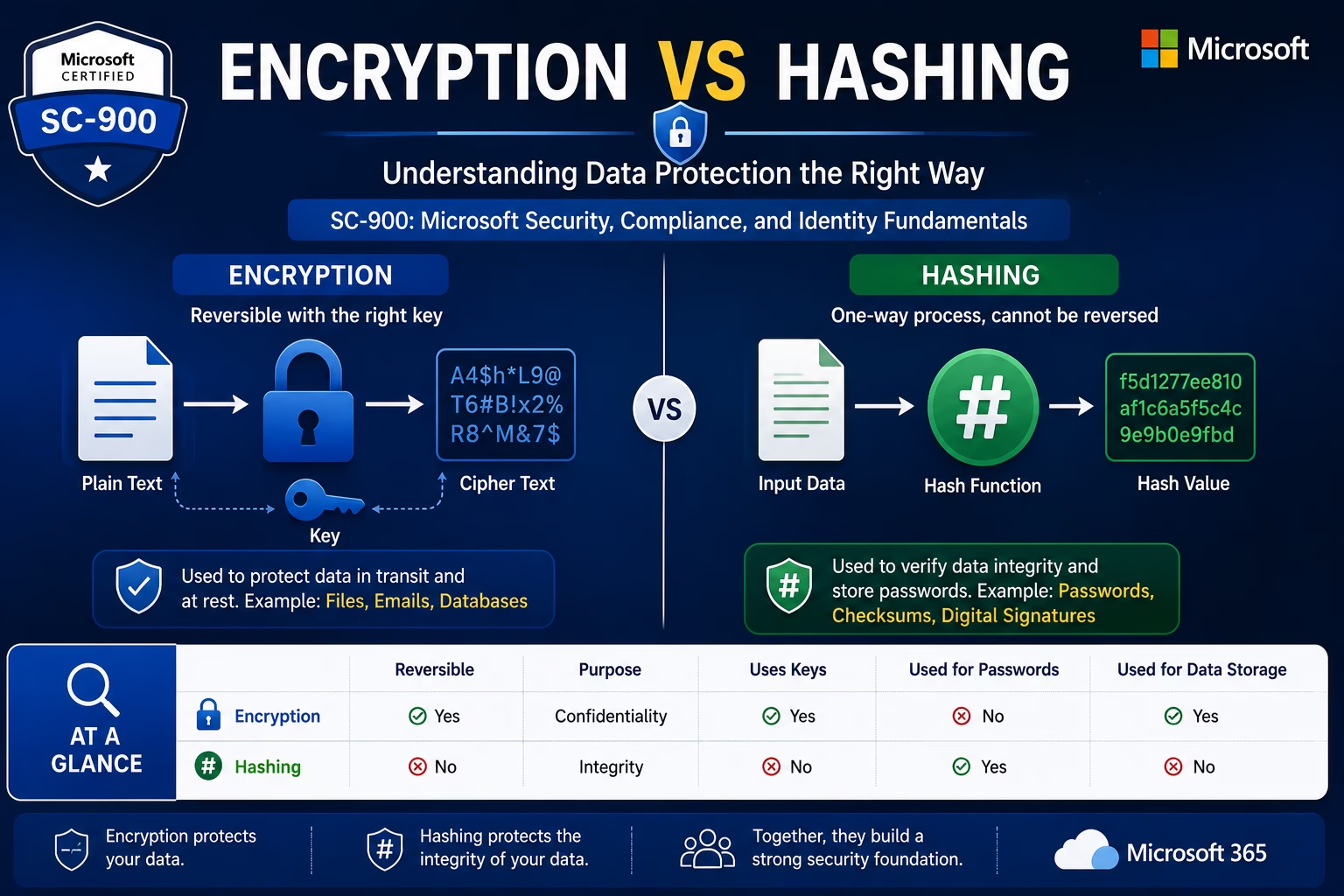
Learning Objectives After completing this guide, you will be able to: Encryption vs Hashing in SC-900 Data protection is a core theme in SC-900 (Microsoft Security, Compliance, and Identity Fundamentals), and one of the most commonly misunderstood topics is the difference between encryption and hashing. Many beginners assume these two concepts are interchangeable.They are not. ...
Read the full article Least Privilege Access in SC-900: Why Minimal Access Reduces Security Risk
Learning Objectives After completing this guide, you will be able to: Least Privilege Access in SC-900 One of the most common causes of security incidents is excessive access. Users often have permissions they no longer need, administrators have standing privileges, and applications are granted broader access “just in case.” When any of these accounts are ...
Read the full article Zero Trust Model in SC-900 – Never Trust, Always Verify
Learning Objectives After completing this guide, you will be able to: Zero Trust Model For many years, security was built on a simple assumption:If you are inside the network, you can be trusted. That assumption no longer works. Cloud services, remote work, mobile devices, and identity-based attacks have changed everything. Today, most security breaches do ...
Read the full article Defense in Depth in SC-900: Understanding Microsoft’s Layered Security Model
Learning Objectives After completing this guide, you will be able to: Defense in Depth in SC-900 Security failures rarely happen because a single control was missing.They happen because multiple safeguards were absent or poorly layered. That is why Defense in Depth is a core concept in SC-900 (Microsoft Security, Compliance, and Identity Fundamentals). Microsoft does ...
Read the full article Shared Responsibility Model in SC-900: Who Is Responsible for What in the Cloud?
Learning Objectives After completing this guide, you will be able to: Shared Responsibility Model in SC-900 One of the most misunderstood concepts in cloud security is who is actually responsible for protecting what. Many organisations assume that once they move workloads to the cloud, security becomes the cloud provider’s job. Others assume the opposite — ...
Read the full article