Learning Objectives
After completing this guide, you will be able to:
- Explain why identity is an admin responsibility rather than a security-only concern.
- Describe how MS-102 reframes identity ownership beyond SC-900.
- Identify the hidden risks of group-based access.
- Understand why identity lifecycle thinking differs for senior admins.
MS-102 Identity: The Crucial Shift from Security Feature to Admin Responsibility
We’ve already looked at where Zero Trust breaks and why admin decisions matter more than tools. Now, we look at the core of those decisions: Identity.
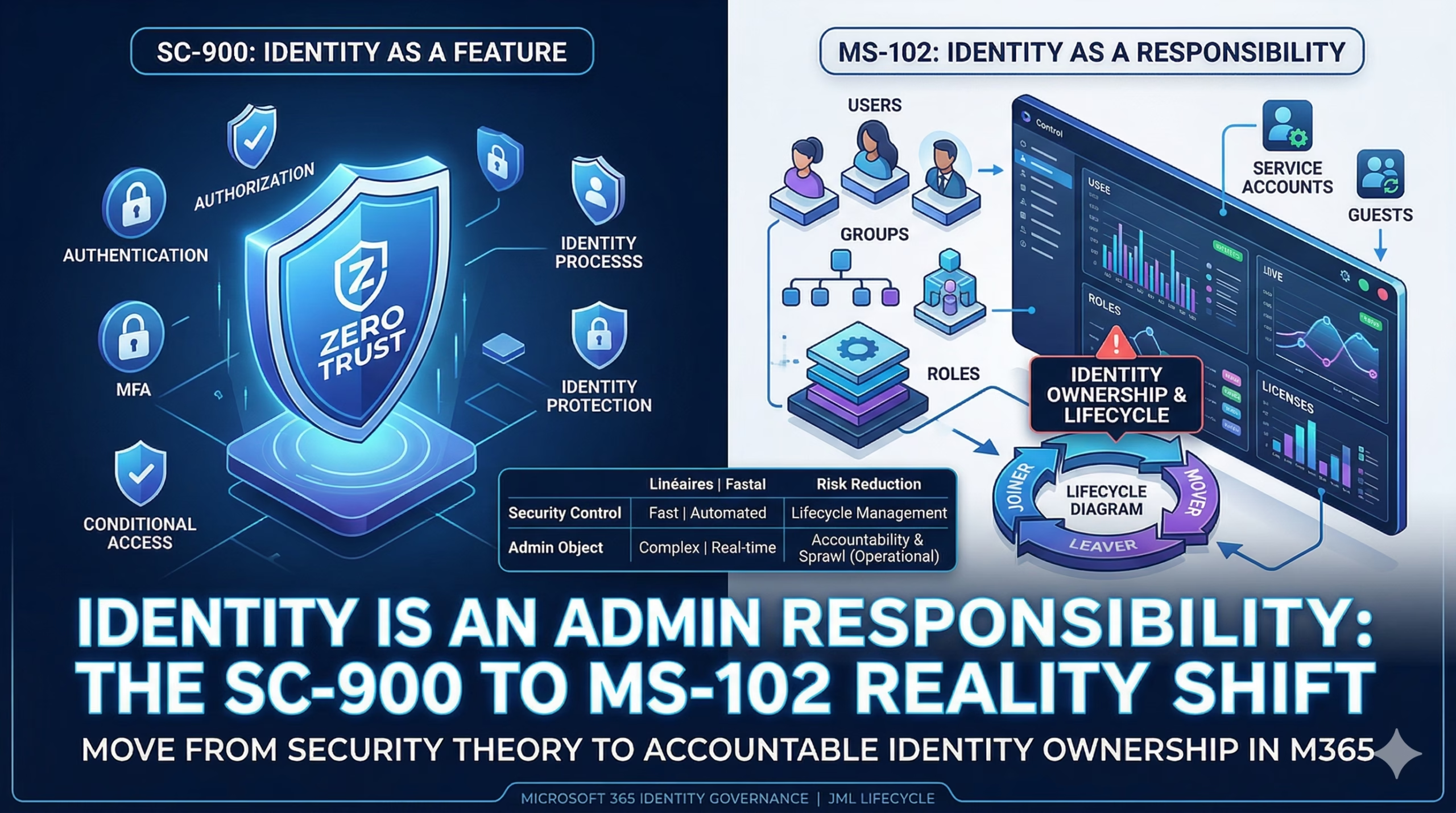
The SC-900 to MS-102 transition is more than just a step up in exam difficulty. It reaches a turning point when you realize that MS-102 Identity is not a security feature it is an ownership responsibility.
Identity is not a security feature.
It is an administrative responsibility.
In SC-900, identity is presented as a pillar of security.
In MS-102, identity becomes something far heavier:
Something you own, maintain, and are accountable for.
How MS-102 Identity Reframes Ownership Beyond SC-900
SC-900 explains identity in terms of:
- Authentication
- Authorization
- MFA
- Conditional Access
- Identity protection
Identity is introduced as a control surface.
From this view:
- Secure identity → secure environment
- Add more controls → reduce risk
This framing is not wrong, but it is incomplete.
How MS-102 Reframes Identity Completely
In real Microsoft 365 environments, identity is not a feature you enable.
It is:
- Users
- Groups
- Roles
- Licenses
- Guests
- Service accounts
- Sync states
- Lifecycle events
These objects:
- Outlive individual security controls
- Affect every workload (Exchange, SharePoint, Teams)
- Accumulate technical debt silently
Senior admins learn this early:
Most security incidents are identity problems that started months earlier.
Identity Is Where Admins Make or Break Security
Here are common admin-driven identity issues that no security tool can fully fix:
- Users added to too many groups “temporarily.”
- Assigning Global Admin roles permanently for convenience is the #1 way identities become compromised. In MS-102, we move toward Privileged Identity Management (PIM) because ‘Permanent’ is a security nightmare.
- Guest users have never been reviewed or removed
- Service accounts are treated like human users
- Licenses are assigned directly instead of through groups
- Deleted users are leaving behind orphaned access
None of these are security product failures.
They are identity ownership failures.
Why Identity Is an Admin Responsibility (Not Security’s)
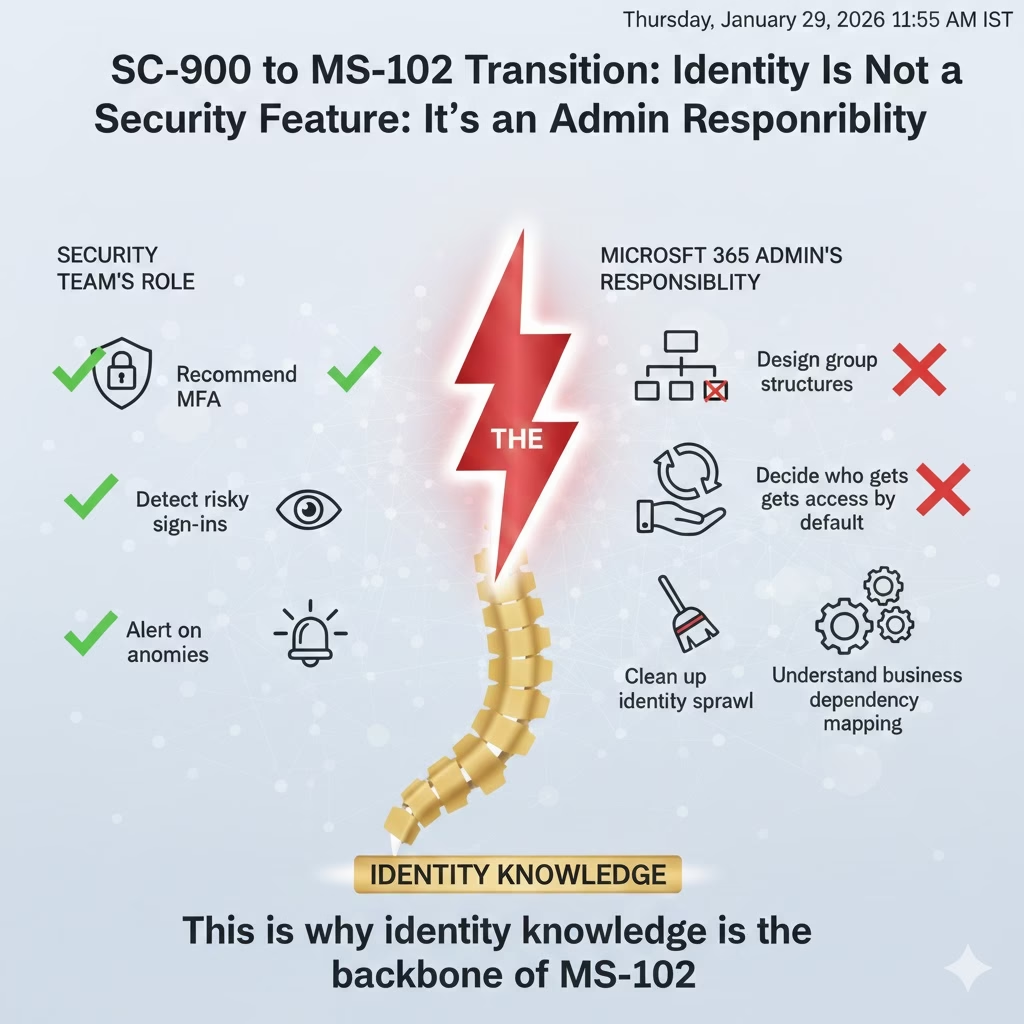
Security teams can:
- Recommend MFA
- Detect risky sign-ins
- Alert on anomalies
But they do not:
- Design group structures
- Own user lifecycle
- Decide who gets access by default
- Clean up identity sprawl
- Understand business dependency mapping
That responsibility sits squarely with Microsoft 365 administrators.
This is why identity knowledge is the backbone of MS-102.
Understanding this shift from ‘security feature’ to ‘admin object’ is the most challenging part of the SC-900 to MS-102 Transition Identity
The Hidden Power of Groups (And Why They’re Dangerous)
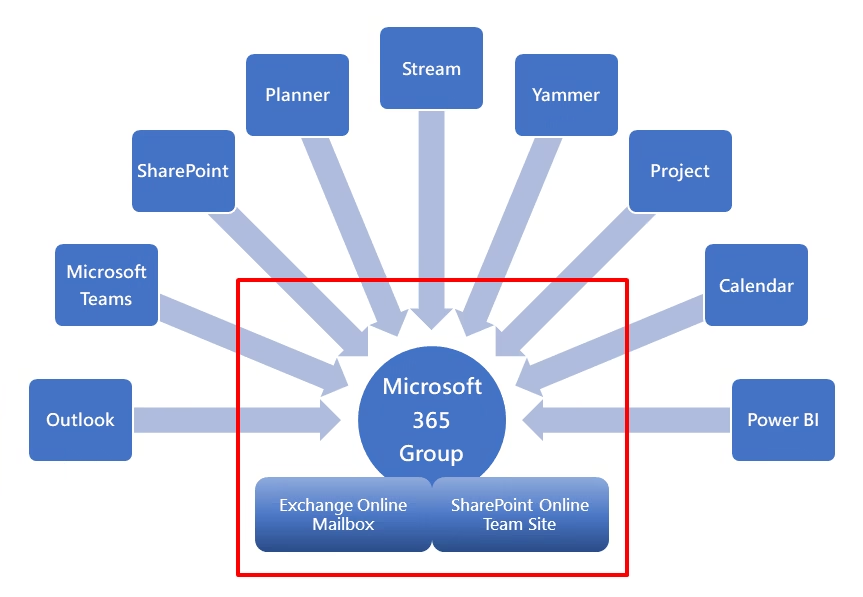
In Microsoft 365, group control:
- Access
- Licensing
- Teams creation
- SharePoint permissions
- Mail distribution
- Conditional Access scope
A poorly designed group structure can:
- Bypass security unintentionally
- Expose data without alerts
- Make audits nearly impossible
Identity security doesn’t start with MFA.
It starts with group discipline.
Identity Lifecycle: Where Senior Admins Think Differently
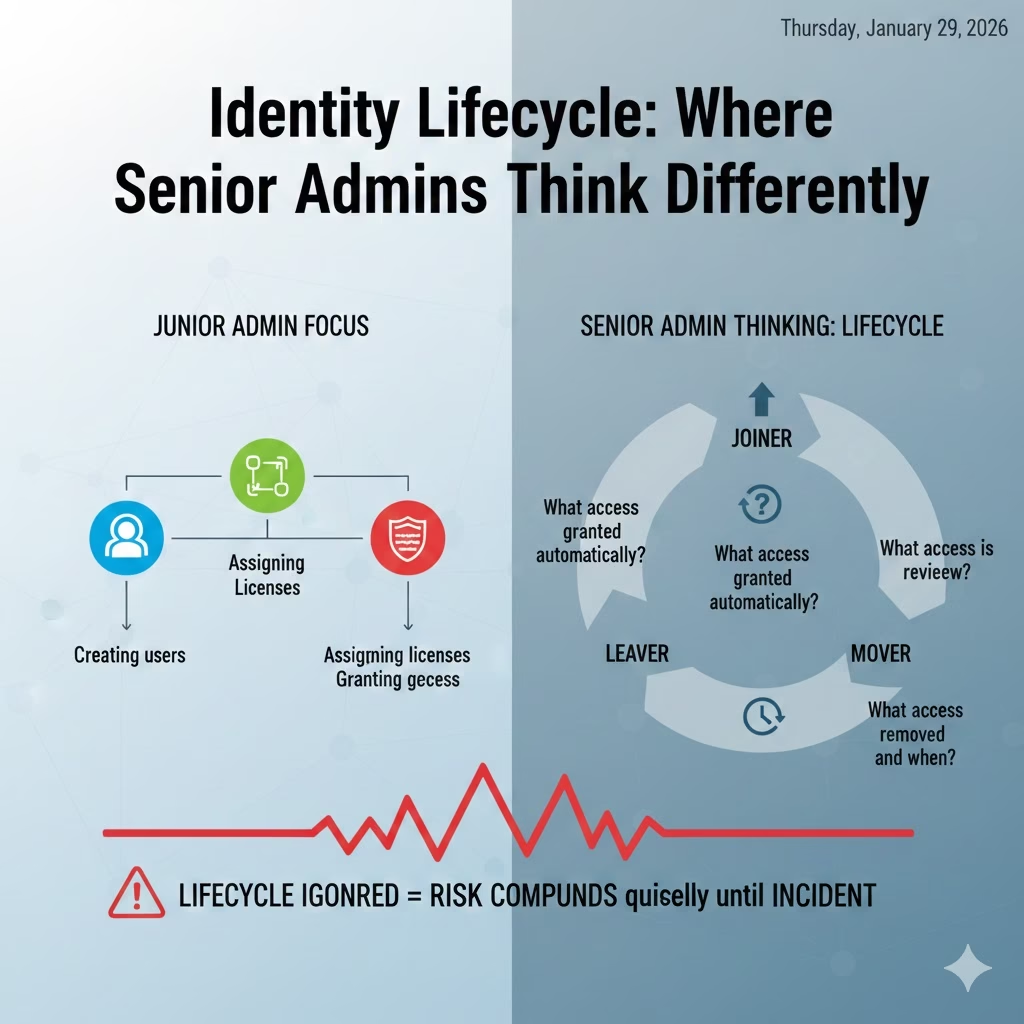
Junior admins focus on:
- Creating users
- Assigning licenses
- Granting access
Senior admins think in lifecycle terms:
- Joiner
- Mover
- Leaver
They ask:
- What access is granted automatically?
- What access is reviewed?
- What access is removed and when?
If lifecycle is ignored, identity risk compounds quietly until it becomes an incident.
Mini-Lab: Identity Ownership Check (10 Minutes)
To help you master the SC-900 to MS-102 Transition Identity, perform this 10-minute Identity Ownership check in your own tenant.
No changes required, just observation.
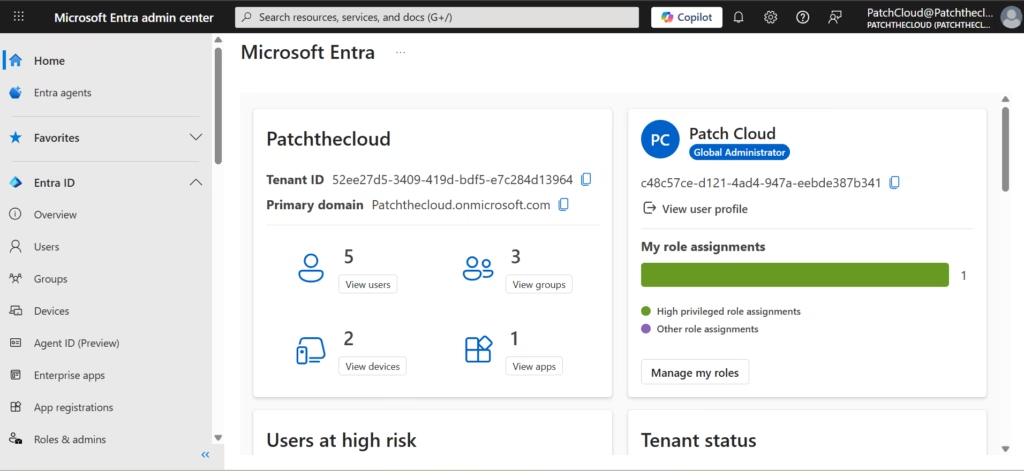
Step 1
Open Microsoft Entra ID.
Step 2
Pick one regular user account.
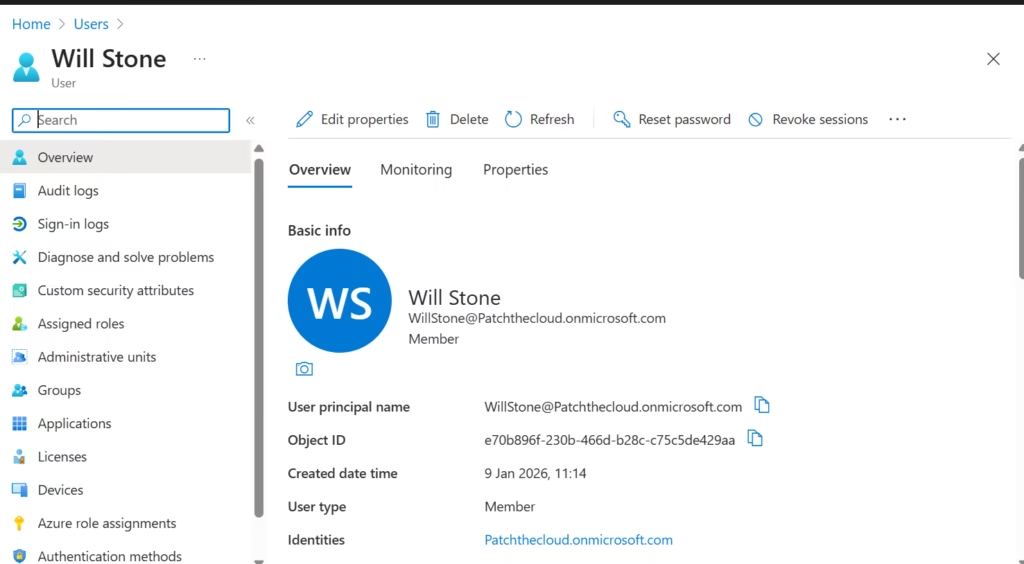
Step 3
Review:
- Group memberships
- Assigned roles
- Licenses
- Sign-in activity
- Guest access visibility
Step 4
Ask yourself:
- Does this access make sense today?
- Would I confidently explain it to an auditor?
- Is this intentional or accidental?
If you hesitate, you’ve found an identity governance gap.
Why This Post Exists Before MS-102 Core Topics
Before we discuss:
- Exchange mailboxes
- SharePoint sharing
- Teams governance
- Conditional Access policies
One truth must be clear:
Every Microsoft 365 workload inherits identity decisions.
If identity is messy:
- Security controls become fragile
- Troubleshooting becomes guesswork
- Compliance becomes reactive
MS-102 starts with identity for a reason.
What’s Next in the Transition Series
In the next post, we zoom out to the platform level:
Where Microsoft 365 data actually lives — and why admins must care.
Because protecting data starts with knowing where it exists.
Final Thought
Mastering MS-102 Identity means moving beyond theory and accepting that you own the lifecycle of every user in your tenant.
- SC-900 teaches you that identity is important.
- MS-102 teaches you that identity is your responsibility.
Once you accept ownership of identity, everything else in Microsoft 365 finally aligns.
If you are just starting out, check out our comprehensive 30-day SC-900 learning path to master the fundamentals of Microsoft Security, Compliance, and Identity.
🔗 Continue Your Learning
Follow the complete SC-900 to MS-102 transition series to move from security theory to administrative mastery:
Now that you’ve mastered the “Who” of the M365 environment, it’s time to tackle the “Where.” In our next deep dive, we explore why protecting information starts with a brutal truth: most admins don’t actually know where their data lives, and in MS-102, that ignorance is a major security risk.
➡️The Vital Truth About Where Data Lives (and Why Admins Must Care) A deep dive into M365 data locations and why they are critical for compliance and performance.
🔗 Related Topics:
Lifecycle Management: The Critical Shift to Lifecycle Thinking (Beyond Simple Features) Move past “checkbox administration” and learn to manage the entire user and resource lifecycle.
For the most current exam objectives and official study modules, refer to the Microsoft Learn SC-900 certification page.
3 thoughts on “MS-102 Identity: The Crucial Truth Why It’s an Admin Responsibility”