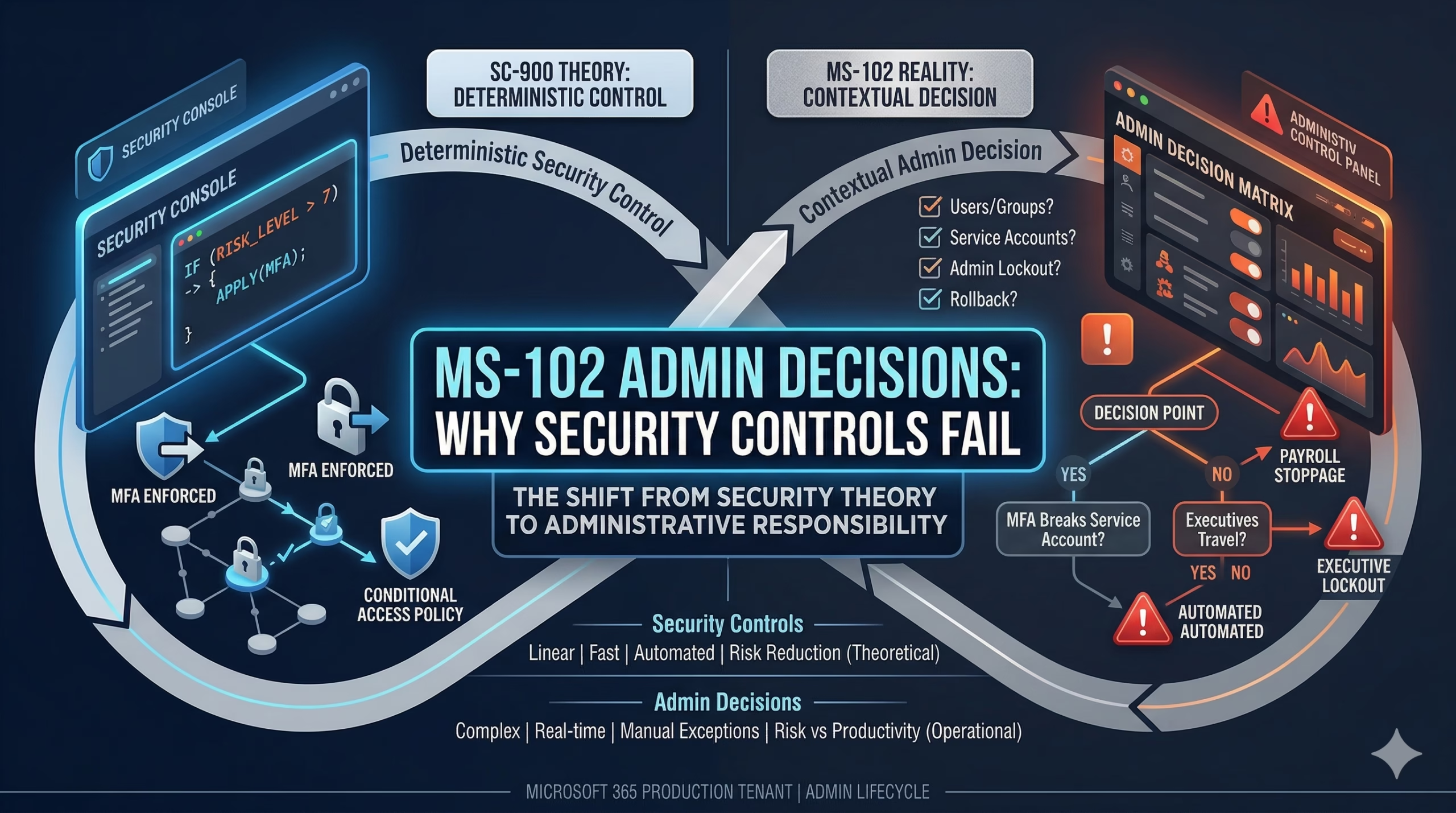
The SC-900 to MS-102 transition is where many professionals make a dangerous assumption: that security failures happen because tools are weak. They don’t. In real Microsoft 365 environments, critical MS-102 Admin Decisions are the real reason why security controls fail under pressure.
This is the reality shift from SC-900 to MS-102 thinking.
Series Navigation: ⬅️ Previous:SC-900 to MS-102: Where Zero Trust Breaks in Production 🟦 Current: MS-102 Admin Decisions: Why Security Controls Fail
Learning Objectives
After completing this guide, you will be able to:
- Explain why security controls fail under real administrative pressure.
- Identify how Secure Score illustrates the gap between configuration and decisions.
- Describe common admin anti-patterns.
- Understand why admin decisions matter more than tools alone.
What SC-900 Teaches About Security Controls
SC-900 introduces security controls as:
- Necessary
- Logical
- Effective when enabled correctly
You learn about:
- MFA
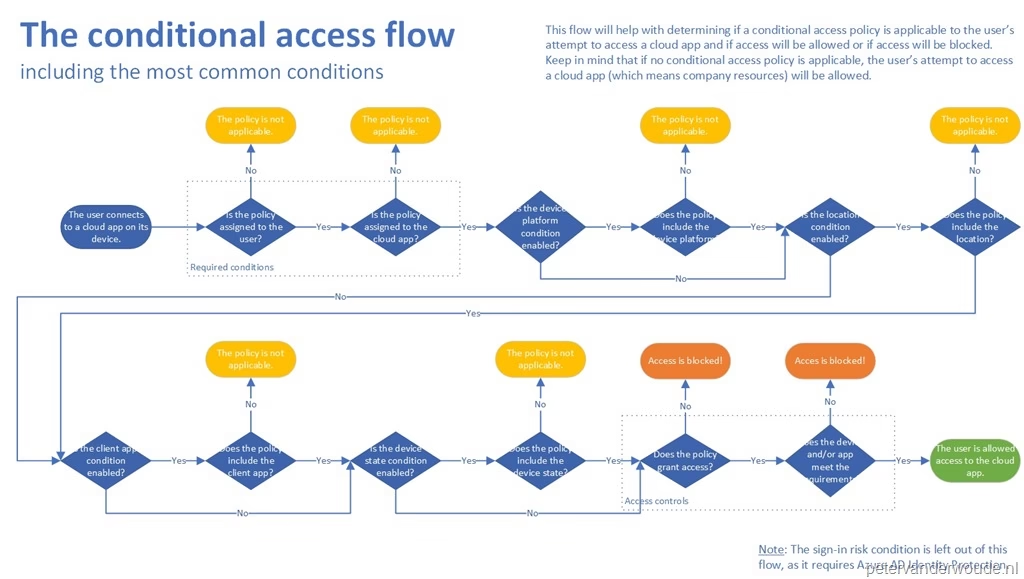
- Conditional Access
- Identity protection
- Secure Score
- Monitoring and alerts
At this level, controls feel like solutions.
Enable the right ones → reduce risk.
That’s true — but incomplete.
What MS-102 Admin Decisions Force You to Confront
MS-102 assumes something SC-900 doesn’t emphasize enough:
Every security control has operational side effects.
Admins don’t just enable controls.
They live with the consequences.
Examples senior admins see regularly:
- MFA breaks automation accounts
- Conditional Access blocks executives mid-travel
- Secure Score recommendations conflict with business apps
- Role assignments are too broad “temporarily” and stay that way
- Emergency access accounts are poorly documented
The tool didn’t fail.
The decision design did.
Secure Score: The Best Example of This Problem
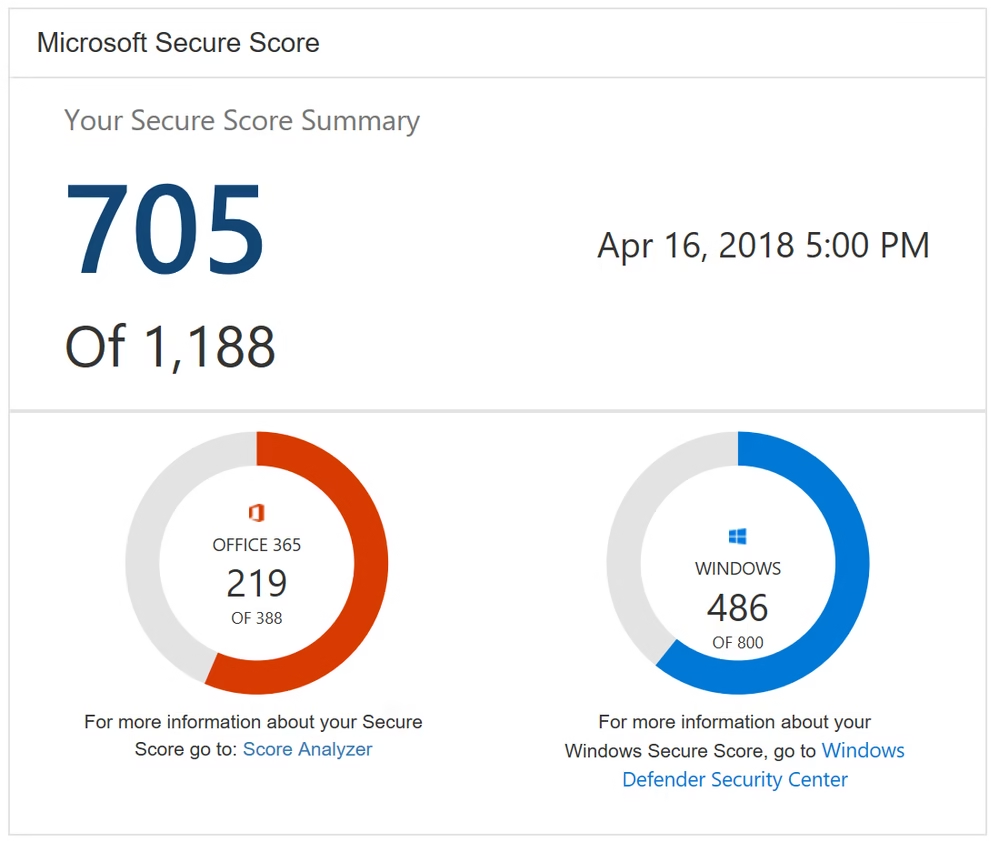
Microsoft Secure Score often recommends:
- Enforcing MFA for all users
- Blocking legacy authentication
- Restricting sign-ins aggressively
From a security perspective: ✅ correct
From an admin perspective: ❓ incomplete
Secure Score doesn’t tell you:
- Which service accounts depend on legacy auth
- Which integrations will silently fail
- Who receives the first escalation call
- How to recover if admins are locked out
In the SC-900 to MS-102 transition, this is a critical realization:
Security tools suggest what to do.
Administrators must decide how and when to do it safely.
Why Admin Decisions Matter More Than Tools
Security controls are deterministic.
Admin decisions are contextual.
As an administrator, you constantly balance:
- Risk vs productivity
- Security vs availability
- Compliance vs usability
Two tenants can enable the same control and experience:
- Completely different outcomes
- Completely different incidents
The difference is not the tool.
It’s identity design, role scoping, exception handling, and rollback planning.
These are MS-102 responsibilities.
A Common Admin Anti-Pattern
One of the most common mistakes during the SC-900 to MS-102 transition is this:
“Let’s enable it now. We’ll fix issues if users complain.”
This approach leads to:
- Emergency rollbacks
- Loss of admin credibility
- Security fatigue across the organization
Senior admins think differently:
- What breaks first?
- Who is impacted?
- What is the rollback path?
- Is this reversible?
Security maturity is not about speed of enforcement It’s about the quality of decisions.
Mini-Lab: Identify Decision Risk (No Changes Required)
This mini-lab helps you identify the risks associated with critical MS-102 Admin Decisions before you apply them to a production tenant.
This lab is purely observational.
Step 1
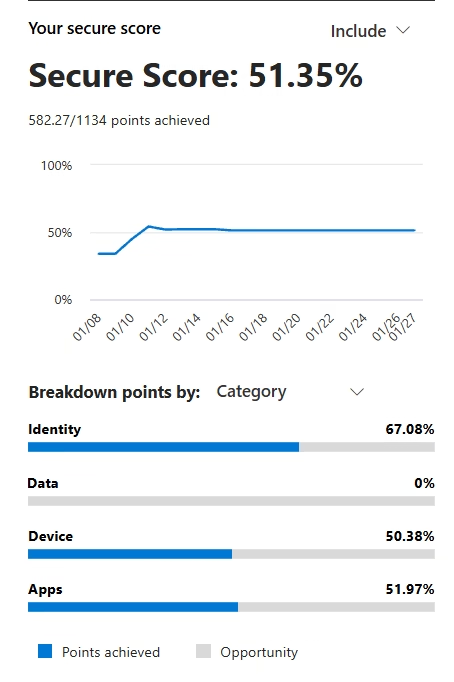
Open Microsoft Secure Score.
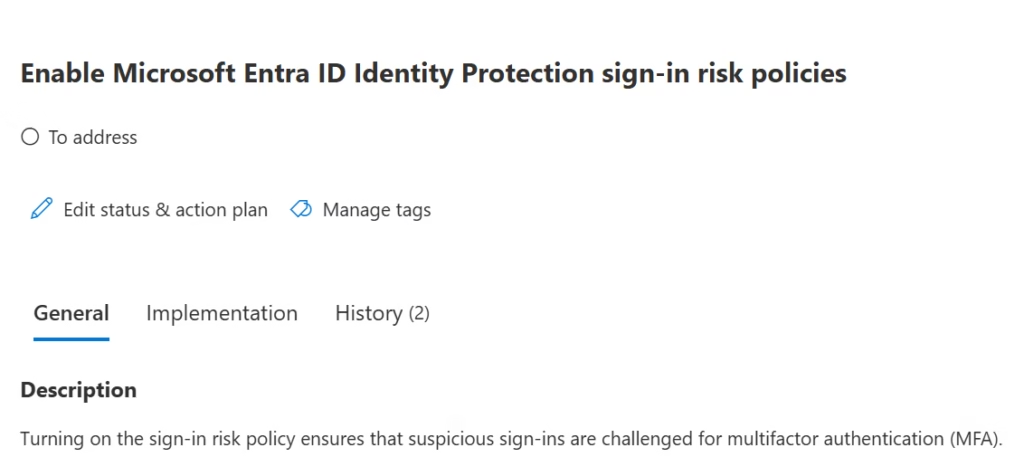
Step 2
Pick one identity-related recommendation.
Step 3
Ask these admin questions:
- Which users or groups does this affect?
- Are service accounts included?
- Are admins protected from lockout?
- Is there a documented rollback?
If you cannot answer these confidently, the risk is administrative, not technical.
Why This Post Exists Before MS-102 Content
Before we start discussing:
- Users and groups
- Admin roles
- Conditional Access
- Exchange, SharePoint, and Teams settings
You must accept this principle:
Security controls are easy to enable.
Admin accountability is hard to manage.
MS-102 is not about learning more tools.
It’s about owning the impact of your decisions.
What’s Next in the Transition Series
In the next post, we go even deeper into the foundation:
Why identity is not a security feature — it’s an admin responsibility.
Because once you understand identity ownership,
everything else in Microsoft 365 finally makes sense.
Final Takeaway
SC-900 teaches you what security should look like, but MS-102 Admin Decisions define who is responsible when things go wrong. Mastering the transition means owning those decisions. That difference defines the SC-900 to MS-102 transition.
If you are just starting out, check out our comprehensive 30-day SC-900 learning path to master the fundamentals of Microsoft Security, Compliance, and Identity.
🔗 Continue Your Learning
Follow the complete SC-900 to MS-102 transition series to move from security theory to administrative mastery:
Now that you understand why MS-102 Admin Decisions are the real foundation of a secure tenant, it’s time to look at the “Who.”
In our next deep dive, we explore why identity isn’t just a checkbox in Entra ID, it’s your primary administrative responsibility.
➡️The Crucial Truth: Why Identity is an Admin Responsibility. Stop treating identity as a “security feature” and start managing it as the foundation of your tenant.
🔗 Related Topics
- Data Architecture: The Vital Truth About Where Data Lives (and Why Admins Must Care) A deep dive into M365 data locations and why they are critical for compliance and performance.
- Lifecycle Management: The Critical Shift to Lifecycle Thinking (Beyond Simple Features) Move past “checkbox administration” and learn to manage the entire user and resource lifecycle.
For the most current exam objectives and official study modules, refer to the Microsoft Learn SC-900 certification page.
4 thoughts on “MS-102 Admin Decisions: Why Security Controls Fail | TechCertGuide”