
Learning Objectives
After completing this guide, you will be able to:
- Explain why Zero Trust concepts behave differently in production environments.
- Describe the shift in thinking from SC-900 theory to MS-102 administration.
- Identify why Secure Score illustrates the gap between theory and practice.
- Understand why administrators are essential to Zero Trust success.
SC-900 to MS-102 transition
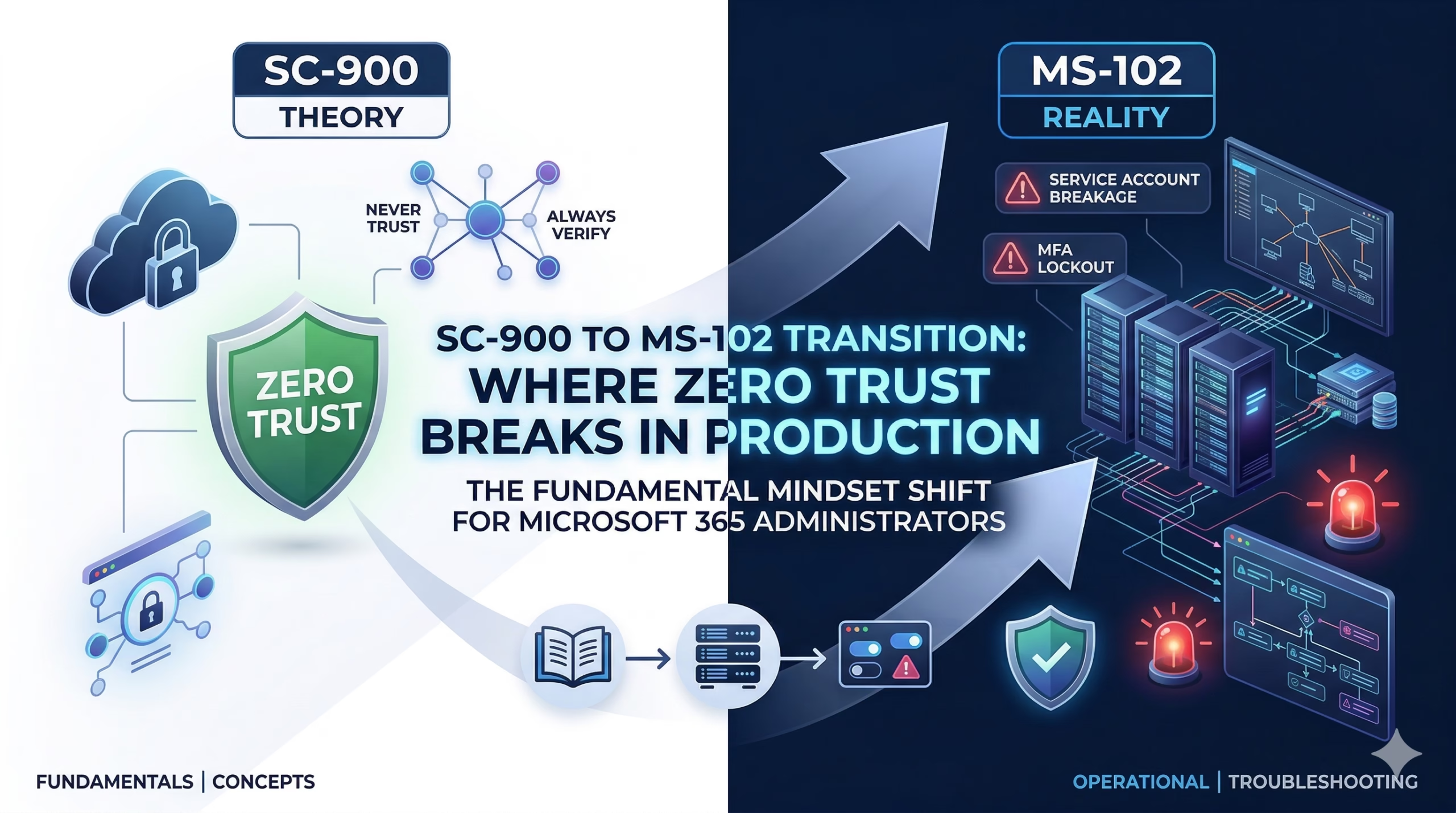
If you’ve completed your SC-900, you’ve learned the elegant theory of Zero Trust. But as you begin the SC-900 to MS-102 Transition, you quickly realize that production environments are messy. In the real world, ‘Never Trust, Always Verify’ sounds great until a legacy service account breaks your entire payroll system.
In SC-900, Microsoft explains it clearly:
Never trust. Always verify.
Identity becomes the perimeter.
Access is continuously evaluated.
Risk is reduced through controls like MFA, Conditional Access, and monitoring.
Conceptually, it’s elegant.
Operationally, it’s fragile.
That fragility is where MS-102 thinking begins.
Zero Trust Works Perfectly in Perfect Tenants
SC-900 does its job well by teaching the ‘why,’ but the from SC-900 theory to MS-102 practice jump is where most admins struggle with legacy constraints.
Understanding the sc-900-to-ms-102-transition
- Why credentials are the new attack surface
- Why device trust matters
- Why security controls must be layered
- Why identity-centric security is unavoidable
Navigating the SC-900 to MS-102 Transition: Theory vs. Reality
At a concept level, Zero Trust assumes:
- Clean user identities
- Predictable authentication flows
- Modern applications
- No business-critical exceptions
As a senior administrator, I can tell you this plainly:
No production Microsoft 365 tenant looks like that.
Where Zero Trust Starts Breaking in Real Environments
The moment you move from learning security to running a tenant, theory meets reality.
Here are situations every experienced M365 admin recognizes:
- Service accounts that cannot complete MFA
- Legacy applications that break with modern authentication
- Executives locked out while traveling
- Emergency “break-glass” accounts that bypass controls
- External users who need access immediately, not after governance reviews
- Automation scripts that fail when Conditional Access is tightened
None of these are attacker techniques.
They are operational constraints.
Zero Trust does not account for them automatically.
Administrators must.
The Real Shift from SC-900 to MS-102
This isn’t just a change in exam objectives; it’s the shift in security mindset. You stop asking ‘Is this secure?’ and start asking ‘What will this break?
SC-900 mindset:
“Is this secure?”
MS-102 mindset:
“What will this break if I enable it?”
Security training focuses on controls.
Administration focuses on consequences.
As an admin, you are not protecting diagrams
You are protecting:
- Payroll processing
- Email delivery
- Executive access
- Business continuity
Sometimes that means negotiating with Zero Trust, not blindly enforcing it.
Feature | SC-900 Theory (The Dream) | MS-102 Reality (The Nightmare) |
| MFA | Enable for everyone immediately | Breaks the 10-year-old service account |
| Legacy Auth | Block it all | Executive’s favorite old mail app stops working |
| Identity | The new perimeter | A mess of unmanaged guest users |
Secure Score: A Perfect Example of the Gap
Microsoft Secure Score often recommends:
- Enforcing MFA everywhere
- Blocking legacy authentication
- Restricting sign-ins aggressively
From a security perspective, this is correct.
From an admin perspective, unanswered questions remain:
- Which service accounts will stop working?
- Which third-party apps will fail silently?
- Who gets locked out first?
- How do you recover at 2 AM?
Microsoft Secure Score highlights the gaps, but operationalizing Zero Trust in M365 means knowing when to follow a recommendation and when to document an exception for business continuity
That difference is critical.
Why Zero Trust Needs Administrators to Survive
Zero Trust is not self-sustaining.
It only works when:
- Users are intentionally designed
- Groups are meaningful and controlled
- Roles are scoped and temporary
- Exceptions are documented and reviewed
- Identity lifecycle is managed, not ignored
These are administrative disciplines, not security slogans.
Most real-world security incidents don’t begin with attackers —
They begin with well-intended admin changes made without understanding the downstream impact.
Mini-Lab: Observe the Gap
This is an observation exercise, not a deployment.
Step 1
Open Microsoft Secure Score in your tenant.
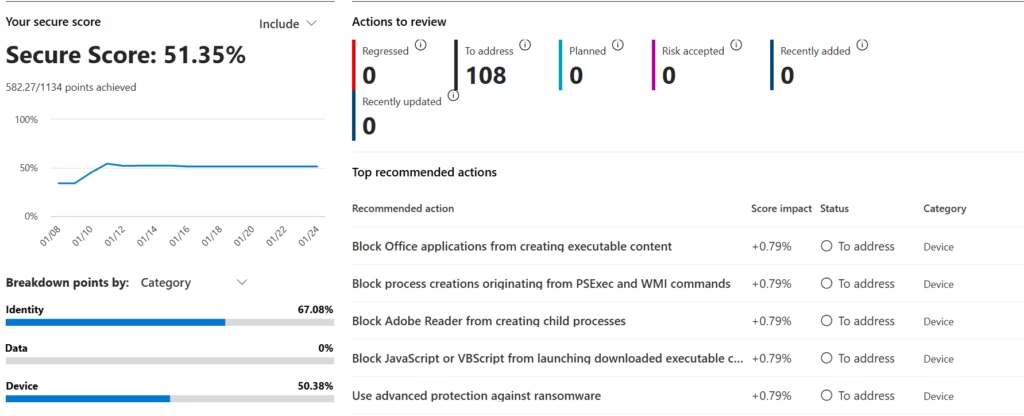
Step 2
Filter recommendations to Identity-related items only.
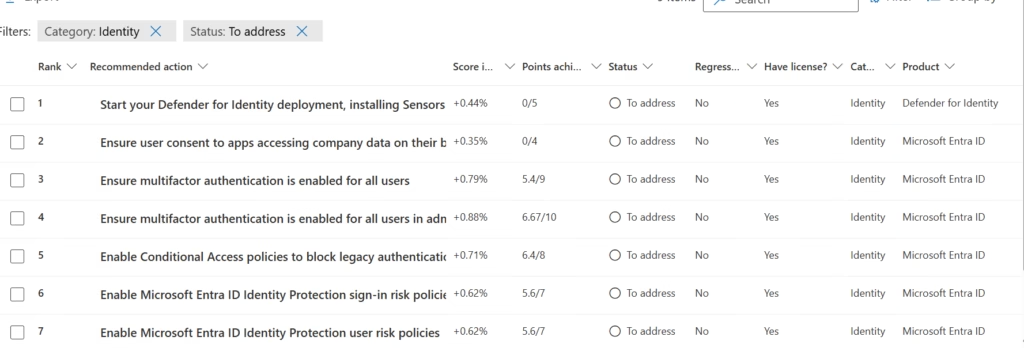
Step 3
For each recommendation, ask:
- Which users does this affect?
- Which groups are involved?
- Which business process depends on this access?
- What is the rollback plan?
If those answers aren’t clear, you’ve just identified the gap between security knowledge and administrative readiness.
Why This Post Exists Before MS-102 Content
Before we talk about:
- Microsoft Entra ID users and groups
- Exchange Online
- SharePoint Online
- Microsoft Teams
- Conditional Access
- Compliance and governance
One principle must be clear:
Administrators don’t implement Zero Trust.
They operationalize it under imperfect conditions.
That operational reality is what MS-102 is really about.
What’s Coming Next
In the next post, we’ll tackle the real foundation of Microsoft 365 administration:
Why identity is not a security feature it’s an admin responsibility.
Because if identity design is weak,
no security control can compensate for it.
Final Thought
SC-900 teaches you why security matters.
MS-102 teaches you why every checkbox has a business impact.
Understanding where Zero Trust breaks is not a weakness it’s the most important part of a successful SC-900 to MS-102 transition and the starting point of becoming a real Microsoft 365 administrator
If you are just starting out, check out our comprehensive 30-day SC-900 learning path to master the fundamentals of Microsoft Security, Compliance, and Identity.
🔗 Continue Your Learning
Follow the complete SC-900 to MS-102 transition series to move from security theory to administrative mastery:
- Next Post: Security Controls Don’t Fail, Admin Decisions Do Explore why the most secure settings in M365 often fail due to poor operational choices.
- Identity Mastery: The Crucial Truth: Why Identity is an Admin Responsibility Stop treating identity as a “security feature” and start managing it as the foundation of your tenant.
- Data Architecture: The Vital Truth About Where Data Lives (and Why Admins Must Care) A deep dive into M365 data locations and why they are critical for compliance and performance.
- Lifecycle Management: The Critical Shift to Lifecycle Thinking (Beyond Simple Features) Move past “checkbox administration” and learn to manage the entire user and resource lifecycle.
For the most current exam objectives and official study modules, refer to the Microsoft Learn SC-900 certification page.
4 thoughts on “SC-900 to MS-102 Transition: Moving from Security Theory to Admin Reality”